
HIMSS TV

But somewhat surprisingly, says Martin Gaynor, professor emeritus at Carnegie Mellon University, researchers found no correlation between department closures and negative outcomes for patients driving greater distances.

Julie Frey, VP of product at Wolters Kluwer Health, explains how its recently released UpToDate Expert AI brings generative AI to clinicians at the point of care, offering diagnostic and treatment guidance.

Dr. Hassan Tetteh of the Johns Hopkins Center for Digital Health and AI discusses his book Harnessing Military Medicine, and explains what his experience as a Navy officer, thoracic surgeon and CMIO have taught him about digital transformation.
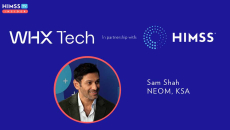
True digital health equity, according to Sam Shah, NEOM's director of health data, includes designing tools to help people in remote or conflict-affected areas transport medical records and get telehealth support.
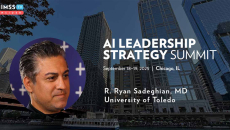
Instead of trying to chase every AI breakthrough, health systems should focus on incremental wins in stable processes to achieve measurable value quickly, says Dr. R. Ryan Sadeghian of the University of Toledo.

Dr. Steve Buslovich, chief medical officer of senior care at PointClickCare, explains how technology can improve both the care delivery experience, for both clinicians and patients.
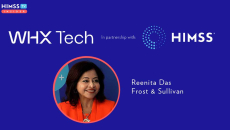
According to Frost & Sullivan's Reenita Das, digital startups often fail by focusing on technology and AI rather than solving clinicians' pain points and reducing friction to genuinely improve care.
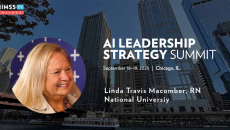
From early rules-based systems to the genAI innovation of today, National University professor Linda Travis Macomber, RN, reflects on four decades of artificial intelligence progress – and looks to the future of connected and continuous care.

According to Hyland Healthcare's Michael Burke, strategic vendor partnerships, data orchestration and standards can help hospitals ensure that patient records are accessible, accurate and ready for AI-enabled healthcare delivery.

Jeff Elton of ConcertAI says health tech companies can anticipate the logic of generative artificial intelligence using knowledge graphs, like the FDA's Elsa, when submitting product reviews, and improve their output accuracy.