
Healthcare IT News
Medical Informatics Engineering finds rewarding niche in occupational health, outfitting the employee clinics of some of the world's largest companies
The changes taking place in U.S. healthcare as a result of rapid healthcare IT adoption leave the nation's health IT chief Farzad Mostashari optimistic – especially about improving quality, he told the audience at a recent meeting of the National Quality Forum as he urged: "Keep our eyes on the prize."
Most hospital CIOs would agree that achieving meaningful use of electronic health record systems is not for the faint-hearted. It’s a rigorous, complex program that demands difficult and bold action from even the most seasoned IT experts. Most seem ready to tackle the work, both to improve patient care – and to collect the attendant incentive money.
For a few years now, I’ve been thinking about the potential intersections of genetics/genomics/proteomics and connected health.
An Electronic Health Record doesn’t accomplish much if providers are reluctant to use it. That’s why there are many new companies helping to spur EHR adoption by providing easy-to-use alternatives to keyboard data entry.
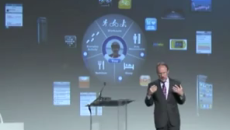
Christopher Wasden, managing director of PricewaterhouseCoopers, shows off his favorite mHealth apps and devices working together as his connected personal health record and discusses the problems with interoperability and integration with most PHRs in this clip from his HIT X.0 presentation at HIMSS12.
Todd H. Stokes, of Georgia Tech and Emory University, shows how 3D printing technology can allow for custom-fit wearable devices for continuous monitoring of biosignals. This clip is from Stokes' presentation at HIMSS12 in Las Vegas.
Lack of staffing resources was cited as the most significant barrier to implementing IT, according to the 2012 HIMSS Leadership Survey, which was released last month at HIMSS12.
Lisa Gallagher, HIMSS senior director of privacy and security, isn't particularly optimistic about providers' ability to prove patient data is safe. Asked to assign a letter grade to the security situation in U.S. hospitals, she says, "probably a C."
For the IT team at EKCITA HIE, it was an exhilarating end to an impromptu challenge – the challenge posed by the country’s top champion for interoperable healthcare, no less.