
Erin McCann
Health information technology systems have made their way to the No. 1 patient safety concern for healthcare organizations, according to the findings of a new ECRI industry report.

John Halamka, MD offers advice for IT leaders, discusses privacy and security and talks about his current book, GeekDoctor: Life as Healthcare CIO.
Healthcare has a few things to do differently in the privacy and security arena -- one of them being: Start taking it seriously. This according to Verizon's annual breach report.
A California-based home care and hospice group has undergone a digital overhaul after providing tablet computers for its some 1,300 care providers. And, although far from an inexpensive rollout, the digitization has saved the group big bucks.
Time and money are in short supply these days, even for folks at the 22-hospital Intermountain Healthcare. And with Stage 2 on the way and a new EHR platform being deployed, they’re feeling the crunch.
It should be no news to anyone: The Office for Civil Rights is poised to beef up, "ramp up" and shake up its HIPAA audit program.
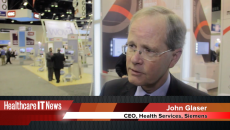
John Glaser, Ph.D., talks about common issues for EHR customers and his top priorities for Siemens.
Sure, the EHR Incentive Program, with its $22 billion plus paid out thus far to meaningful users, might have helped bring the healthcare sector out of the Dark Ages and into the 21st Century, technologically speaking, but do these systems really improve the quality of patient care? A new study out says: for the most part, no.
When it comes to security threat severity, the Heartbleed bug doesn't miss a beat. That's according to Phil Lerner, chief information security officer at Beth Israel Deaconess Medical Center, who, on a scale from 1 to 10, ranks the bug a solid "high priority" at 7.5.
Boston has long proven itself a mecca for healthcare innovation, a hub of some of the best minds and most prestigious hospitals in the nation. And the 2014 Boston Children's Hospital Innovators' Showcase proved no exception.