
Bill Siwicki

"Nurses cannot be everywhere at once," says one expert in video monitoring, who sees promise in "watching AI" helping overworked RNs track patterns in hospital patients over longer periods of time to gain insights into their health trajectory.
The CEO of SteadyMD, one of the companies powering Amazon's virtual care efforts, discusses the potential for direct-to-consumer services, and describes what provider IT leaders should be thinking about as patients get accustomed to telemedicine.

Success Stories & ROI
By reducing the number of flowsheets and their content, they've made documentation more than 10 minutes faster. Across two years, the number of best practice alerts for nursing was reduced by 86%.

Ryan Sousa, vice president of data and analytics/AI at Pivot Point Consulting, discusses what the data problem heralds for the future of HIT, and talks AI and the right to health.

IT leaders need to take a step back and ensure they are truly prepared to use large language models, says one computer scientist who offers detailed deployment advice.

Noninvasive diagnostics are the life's work of Ron Erickson, founder of Know Labs. He explains radio frequency technology and how it could change the course of diabetes care.
Success Stories & ROI
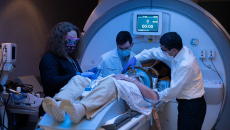
More than two-thirds of the health system's abdominal CTs, chest MRIs and PET-CTs now have interactive links to key findings – and radiologists are finding that capability hugely useful, its associate CMIO reports.

Dr. Terri Shieh-Newton, a member at global law firm Mintz, discusses some of the challenging questions that arise when deploying AI, and offers some perspective for healthcare and technology leaders.
Signs point to yes – and mature remote patient monitoring and telemedicine tools will be key to helping providers capitalize on the shift, one technology leader says.

Incorporating cloud-native architecture, agile methodologies, product-driven development and DevOps all are needed, says Dr. Melek Somai, CTO at Inception Health, a subsidiary of Froedtert Health.