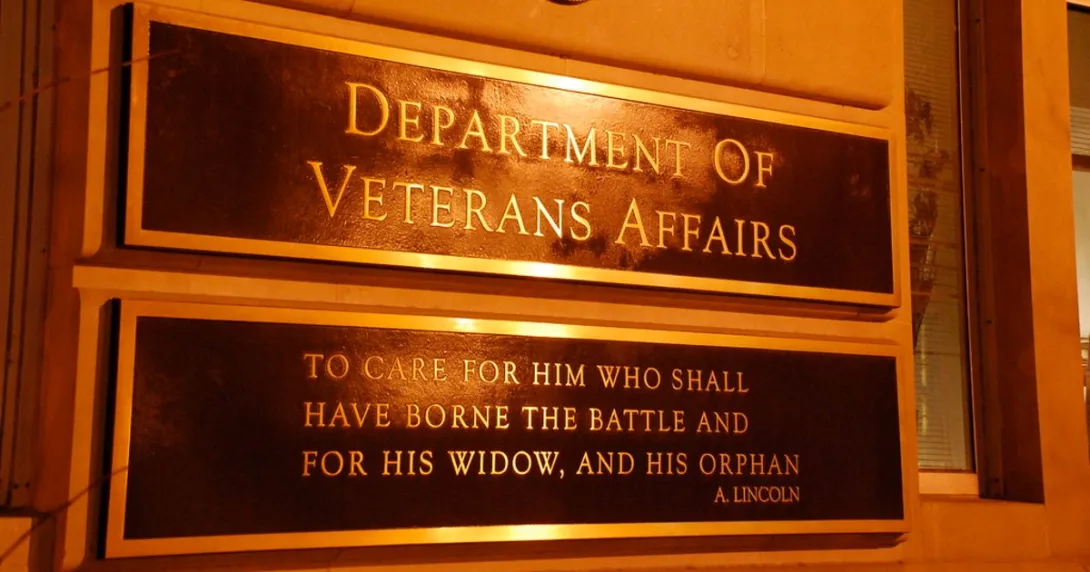
Photo: Department of Veterans Affairs, afagen/Flickr, licensed under CC BY-NC-SA 2.0
The new federal electronic health records system went live at four Michigan hospitals on April 11, marking the end of a multi-year pause on the department's EHR Modernization Program, the U.S. Department of Veterans Affairs said.
Nine more deployments in other states are planned for 2026.
WHY IT MATTERS
The VA said it is focused on how the EHR can provide Michigan veterans with a more seamless healthcare experience by easing the transfer of records among VA sites, the Department of Defense and community hospital partners.
The new EHR promises to improve continuity of care and reduce the need for veteran patients to take redundant tests by integrating private-sector records and sharing medical data across all VA facilities, the department said in an announcement on Monday.
Healthcare staff will be able to also focus more on their patient interactions rather than struggling with outdated technology or missing information, the VA said.
With the EHR's launch at four VA medical centers – Ann Arbor, Battle Creek, Detroit and Saginaw – the department can now achieve a unified health record nationwide, according to Paul Lawrence, the VA's deputy secretary.
"With our Michigan sites now live, we are building strong momentum as we prepare for the next wave of implementation," he said in a statement.
Last month, Lawrence wrote about the skepticism that he said has surrounded the VA's deployment, published on the VA's website.
"This time, everyone is dialed in, and it is influencing how we drive our deployments," he said in the official message. "The bottom line is that, this time, the Federal EHR is working, stable and reliable."
"This long-awaited, long-doubted healthcare transformation is finally happening." –Paul Lawrence, VA deputy secretary
Getting local facilities more involved with implementations was also key to resuming the EHR Modernization Program's rollout.
Lawrence visited all 13 sites scheduled for this year's deployments to answer questions and ensure the sites are ready for the new EHR, the VA said.
The VA also said it has already hired dozens to support the implementation process and will ramp up technical staff with plans to hire a total of about 400 personnel to support the federal EHR deployment to all VA facilities by 2031.
How the new system performs in real-world conditions is the true test, according to Lawrence.
"We're getting ready for Monday when a surge of patients happens," he told Battle Creek News Channel 3 in a story over the weekend.
Upcoming EHR deployments for later this year include some VA facilities in Ohio and Kentucky in June, others in Indiana in August, and medical centers in Alaska and Cleveland in October.
THE LARGER TREND
The rollout of the new EHR from Oracle Health, formerly Cerner, follows the resolution of years of technical and bureaucratic hurdles, according to the VA.
In 2024, the VA announced that rollouts would resume after a legislative pause was initiated in 2023.
Then, the Government Accountability Office said in a February 2025 report that more needed to be done to improve the EHR Modernization Program.
Dr. Neil Evans, acting program executive director of the EHR Modernization Program Integration Office, told lawmakers at the time that major improvements to the system had been made throughout the reset period and deployments must be accelerated.
Oracle had completed more than 3,000 functional changes to the EHR that improved its stability and simplified functions, explained Seema Verma, Oracle Health and Oracle Life Sciences executive vice president, in her testimony to the U.S. House of Representatives Subcommittee on Technology Modernization.
A series of complex projects to improve the VA's EHR – "referred to as 'Big Rocks,' are in motion," Evans had said.
The VA said Monday that it has fixed hundreds of problems related to the initial rollout of the EHR system at the six original VA sites.
While there have been reports about ongoing system glitches, the department had dismissed them at the time as political rhetoric.
The VA also told lawmakers in December that, based on system operating metrics over nearly two years and a successful implementation at the Captain James A. Lovell Federal Healthcare Center in North Chicago in 2025, they were ready to deploy the new EHR to the four Michigan medical centers.
A key technical improvement was standardizing the EHR system, the department said.
Previous attempts to mimic old workflows from the previous EHR, VistA, had caused errors that prevented different hospitals from communicating effectively within the new unified platform.
By preventing local system customization, it puts all VA facilities "on the same page," said the VA.
EHR Modernization Program decisions had also been delayed due to infighting among several department councils overseeing it, so the VA said it reduced oversight to one governing council answering to its top leaders to increase accountability and streamline decision-making.
ON THE RECORD
"These first EHR deployments in 2026 represent real progress toward a unified electronic health record that strengthens care delivery for our patients and providers," Lawrence said in a statement.
Andrea Fox is senior editor of Healthcare IT News.
Email: afox@himss.org
Healthcare IT News is a HIMSS Media publication.


