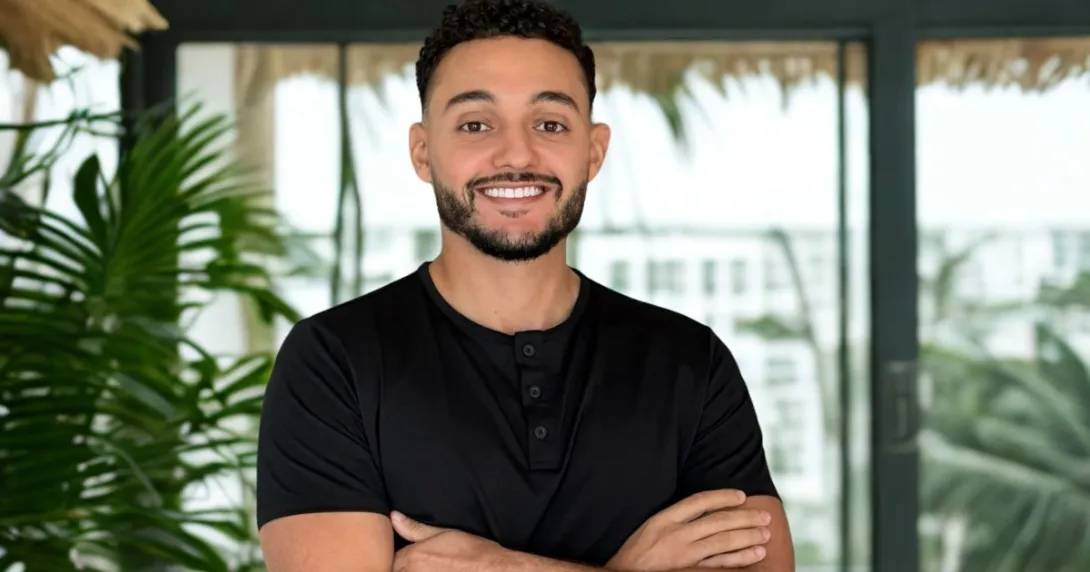
Abanob Farag, founder and CEO of MomentMD
Photo: MomentMD
There are some big challenges in the field of medical education in the United States, partly because of a shortage of preceptors across med schools, nursing instruction and physician assistant training programs.
A lack of suitable in-person preceptors is disrupting student training – and potentially causing delays in their education and related problems.
But the preceptor challenge is yet another place in healthcare where telemedicine could help.
MomentMD, for example, is one company working to solve the problem with telemedicine precepting. The startup, which just announced its 50th university partnership, works with schools including Johns Hopkins, Vanderbilt and the University of Arizona.
Healthcare IT News spoke recently with Abanob Farag, founder and CEO of the company, which develops virtual care and clinical education tools, to discuss the preceptor challenge and the ways telehealth can help.
Q. Please explain the shortage of preceptors across medical, nursing and PA training programs. Why is there a shortage? What does it look like across medical education?
A. There's been a steady buildup to this shortage for years. Medical schools expanded enrollment to meet the projected physician shortage, but the number of preceptors didn't grow with it. The Association of American Medical Colleges reported roughly a 33% increase in MD enrollment since 2002, and when you include DO programs, that jumps to over 50% growth – but we didn't add 50% more teaching sites or preceptors.
It's not just a numbers problem – it's a structural one. The system depends on busy clinicians taking on extra teaching responsibilities with little incentive and increasing administrative load.
Nursing is facing the same issue. The American Association of Colleges of Nursing reported more than 65,000 qualified nursing applicants were turned away in 2023 because there weren't enough faculty, preceptors or clinical sites. That's tens of thousands of future nurses ready to learn but sitting on the sidelines.
For PAs, the situation is just as tight. 95% of program directors say they're concerned about access to adequate clinical sites, and the percentage of programs having to pay for rotations has jumped from 21% to 35% in recent years, according to the Physician Assistant Education Association.
What's making it worse is that the national provider shortage is growing at the same time. The Health Resources and Services Administration continues to expand its shortage area designations in both primary care and mental health, which means the same people we need to teach are already stretched thin seeing patients. The result is a bottleneck that slows down how fast we can train the next generation of clinicians when we actually need them faster than ever.
Q. How can telemedicine help solve this challenge?
A. Telemedicine changes the equation. It breaks the geographic and capacity barriers that have limited training for decades. Instead of relying only on local clinics, schools can connect their students with qualified preceptors anywhere in the country.
It's not just about convenience, it's about equity. Rural and underserved regions that don't have enough local preceptors can now host clinical experiences virtually, giving students exposure to a more diverse patient population.
The AAMC's Telehealth Competencies and the AACN Essentials both outline how telehealth experiences can meet educational standards while preparing students for the real world. The reality is that telemedicine isn't a niche skill anymore, it's part of how healthcare is practiced.
Training students through virtual encounters means they're developing digital communication, remote assessment and tech-enabled decision-making skills that are becoming essential across every discipline.
From a faculty perspective, telemedicine also brings consistency and structure. Encounters can be scheduled, observed and evaluated with recorded feedback sessions, where allowed, so preceptors can give high-quality supervision without needing to be physically present. It's one of those rare cases where technology doesn't replace the human element, it amplifies it by making it scalable.
Q. Please describe how a telemedicine preceptor works with a student versus an in-person preceptor.
A. The relationship between student and preceptor doesn't change, it's still about mentorship, feedback and clinical reasoning – how it happens is very different. In tele-precepting, students and preceptors connect in a secure virtual clinic.
The student leads the encounter: takes the history, conducts focused exams using telehealth techniques and presents the plan. The preceptor observes, provides real-time input, and coaches the student through patient interaction, clinical reasoning and digital professionalism.
The structure actually allows for more deliberate teaching moments. Programs can pre-brief cases, assign specific visit types, and schedule time for post-encounter feedback. ARC-PA standards now recognize telehealth as a valid clinical setting, and nursing programs have fully integrated virtual care into their competency frameworks.
It's no longer "alternative learning," it's mainstream clinical education. And with telemedicine, students get to reach diverse patient populations they might never see in their local area: rural patients, urban populations, different socioeconomic and cultural backgrounds, which broadens their understanding of how care is delivered across the country.
Where tele-precepting stands out today is the technology exposure. Students are learning to work with AI-powered workflows, dictation tools and smart documentation systems that mirror what they'll use in modern practice.
They also get access to rotation-specific educational content: flashcards, quizzes, podcasts and interactive case studies tailored to their specialty. So, they're not just doing clinical work – they're reinforcing it with targeted learning in real time. It creates a feedback loop that's more dynamic than what most traditional placements can offer, and it gives students a head start in mastering digital medicine.
Q. Your company works with 50 universities. What kinds of outcomes are being achieved?
A. Across our university partnerships, the data speaks for itself. More than 2,000 students have completed rotations through our network, totaling more than 120,000 telehealth clinical hours delivered nationwide.
Programs that integrate structured tele-precepting into their rotations have seen average end-of-course exam scores increase by about 70 points. That's measured academic improvement tied to exposure, repetition and aligned feedback cycles.
Operationally, universities are running more efficiently, too. They're reporting 60% faster placement times, 30% fewer graduation delays, and greater visibility into student progress through centralized dashboards. Instead of scrambling each semester to find last-minute sites, clinical coordinators can plan rotations months in advance and adjust as needed with real-time availability.
The broader outcome is capacity. Programs are now able to accept more students without being limited by physical clinic space or regional site shortages. It's a scalable model that strengthens compliance, improves outcomes, and meets accreditation standards while preparing students for the digital-first healthcare environment they're about to enter.
Follow Bill's health IT coverage on LinkedIn: Bill Siwicki
Email him: bsiwicki@himss.org
Healthcare IT News is a HIMSS Media publication.
WATCH NOW: Virtual health produces outcome differences