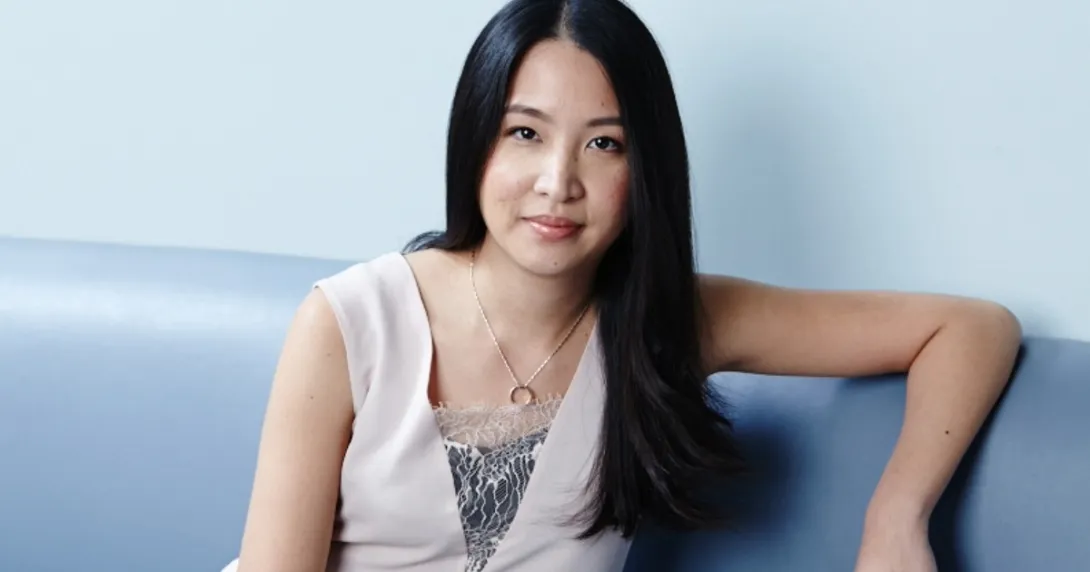
Dr. Kathy Lee, founder of Halcyon Dermatology
Photo: Dr. Kathy Lee
The administrative burden of clinical documentation had become overwhelming at Halcyon Dermatology. Its founder, Dr. Kathy Lee, was routinely working into the evening hours to complete patient notes.
THE CHALLENGE
For Lee, the time burden of reconstructing detailed patient encounters hours after they occurred was incredibly inefficient. The increasing administrative load associated with charting significantly reduced the time she had available for patient care, which she found particularly frustrating.
The increasing demand for documentation led to delays in finalizing charts and created bottlenecks that hindered the clinic's efficiency.
"Training new staff presented another significant challenge," she said. "It took months before a new team member was fully up to speed with our documentation workflows, adding strain when onboarding. Generic documentation tools often failed to meet our clinic's expectations, forcing us to rework notes and double-check accuracy.
"Additionally, there would be times when patients would call after their visit to ask for clarification on their treatment plan," she added. "If the patient's note had not yet been finalized, our staff would have to wait to speak to the provider to assist our patient. These cumulative inefficiencies directly impacted both our well-being and the patient's experience."
PROPOSAL
Lee learned of vendor ModMed and its AI-powered scribe technology that was specifically designed for dermatology practices to address her challenges.
"The key differentiator was its deep understanding of our treatment protocols, common diagnoses and specialized vocabulary – unlike generic scribe systems that struggle with medical terminology and dermatology-specific procedures," she explained.
"The ambient listening technology would work alongside physicians during patient visits, interpreting clinical conversations and automatically suggesting comprehensive visit notes," she continued. "This enabled us to remain fully engaged with patients and capture thorough documentation, eliminating the need for doctors to prioritize either patient focus or detailed note taking."
The proposed integration with the clinic's existing electronic health record system was crucial for Lee – instead of switching between systems or manually entering data across multiple platforms, everything would populate directly into patient charts in real time. This seamless workflow promised to eliminate the redundant data entry that was consuming too much administrative time, she said.
MEETING THE CHALLENGE
Halcyon Dermatology implemented AI ambient listening system ModMed Scribe after testing two other vendors' systems, both of which ultimately falling short of the clinic's needs. Rollout began with a phased approach, starting in select exam rooms while maintaining standard documentation as backup to ensure staff didn't compromise patient care during the transition.
Today it's used during all of Lee's medical and cosmetic visits.
"Our medical assistants typically do not accompany me during cosmetic visits, but frequently, while injecting Botox, patients will ask me about their rosacea, psoriasis or other medical issues," she explained.
"Having the new scribe technology allows me to capture the patient issues while performing my cosmetic procedures since it listens during patient encounters and automatically suggests structured documentation that populates directly into our ModMed EHR system."
The dermatology-specific AI scribe also automatically suggests appropriate billing codes and post-procedure instructions.
"The integration works seamlessly within our existing electronic health record platform – there's no switching between systems or manual data transfer," she said. "Clinical information flows directly into the correct chart sections, and after provider approval, structured data populates automatically into fields for diagnoses, procedures and medications.
"During medical visits, our MAs refer to scribe notes to make sure all prescriptions are sent," she continued. "Our administrative staff can also access these notes immediately post-encounter, which has significantly streamlined billing and follow-up."
The front office references scribe notes when a patient checks out and asks about buying the product that was discussed during their visit. Previously, the front office had to find the provider or MA to get that information. Now it is instantly available with the scribe output.
RESULTS
The most measurable improvement has been in post-visit documentation time. Previously, completing daily notes required several hours after clinic hours. Using a non-integrated AI scribe still required a cumbersome process of copying and pasting the information into the relevant fields, which didn't save much time because staff or Lee still needed to generate and format the note, she explained.
"We also dealt with frequent errors around medication names, which ended up taking more time to correct the spelling," she said. "Now, I can complete my documentation review and finalization in less than an hour. But it's not just about speed – accuracy has also improved because I'm reviewing real-time captured information."
Elsewhere, the billing team reports a significant decrease in coding queries and claim rejections.
"Before the artificial intelligence scribe, incomplete or inaccurate procedure documentation often required follow-up calls to clarify details, delaying claim submissions," Lee recalled.
"Now, with precise procedure details, appropriate codes and complete clinical justification automatically captured during encounters, our claims process runs more smoothly and we see faster reimbursement cycles.
"And new staff training has been revolutionized," she continued. "Previously, MAs required months to become proficient with our documentation systems and learn to interpret clinical notes effectively. With the AI handling complex documentation structure, new hires focus on patient interaction skills and clinical knowledge rather than administrative mechanics."
Recent staff members achieved operational independence within weeks, and they report much higher confidence levels without the constant stress of documentation errors.
"To date, we have had two new staff members onboard with our practice while using ModMed Scribe, and both were able to gain proficiency in charting within just a few weeks," she reported. "All of our previous new hires typically required a minimum of three to six months before they could be considered proficient in the EHR."
ADVICE FOR OTHERS
For specialists, the most critical factor is ensuring an AI scribe has been specifically trained in the specialty's clinical language and workflows, Lee advised.
"Many organizations assume any AI scribe will suffice, but generic systems often create more problems than they solve when faced with specialized terminology," she explained. "The difference between accurate specialty-specific documentation and generic transcription can mean the difference between streamlined workflows and increased administrative burden.
"Conduct thorough pilot testing that goes beyond basic demonstrations," she added. "Test the system with your most complex cases – unusual diagnoses, multi-step procedures and challenging patient interactions. These edge cases will reveal whether the AI truly understands your specialty's nuances or is simply performing sophisticated pattern matching."
Pay particular attention to how the system handles the most common procedures and diagnoses, as these will represent the bulk of documentation needs, she said.
"Finally, consider the total impact on your workflow, extending beyond just documentation," Lee noted. "The most effective AI scribe technology should integrate seamlessly with your current specialty systems, streamlining administrative tasks and reducing processing steps.
"It should be designed for scalability and adaptability to your specific field, committing to advance technology within your field, and ultimately enabling your practice to decrease healthcare delivery costs," she concluded.
Follow Bill's health IT coverage on LinkedIn: Bill Siwicki
Email him: bsiwicki@himss.org
Healthcare IT News is a HIMSS Media publication.
WATCH NOW: How to launch a healthcare AI project, per the VA AI chief


