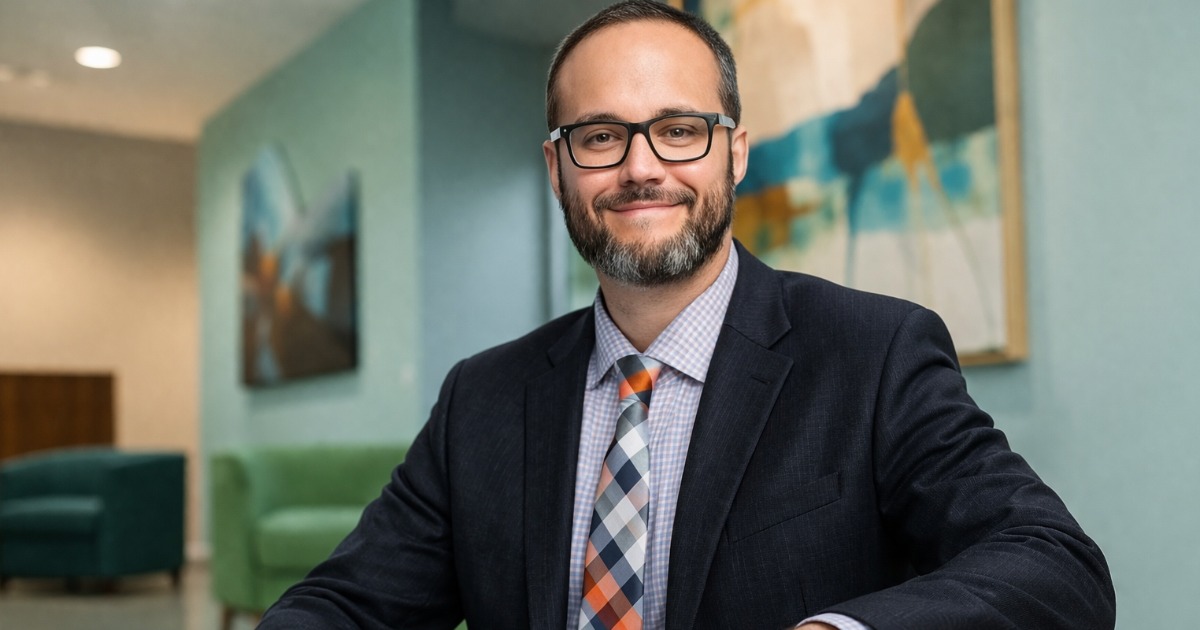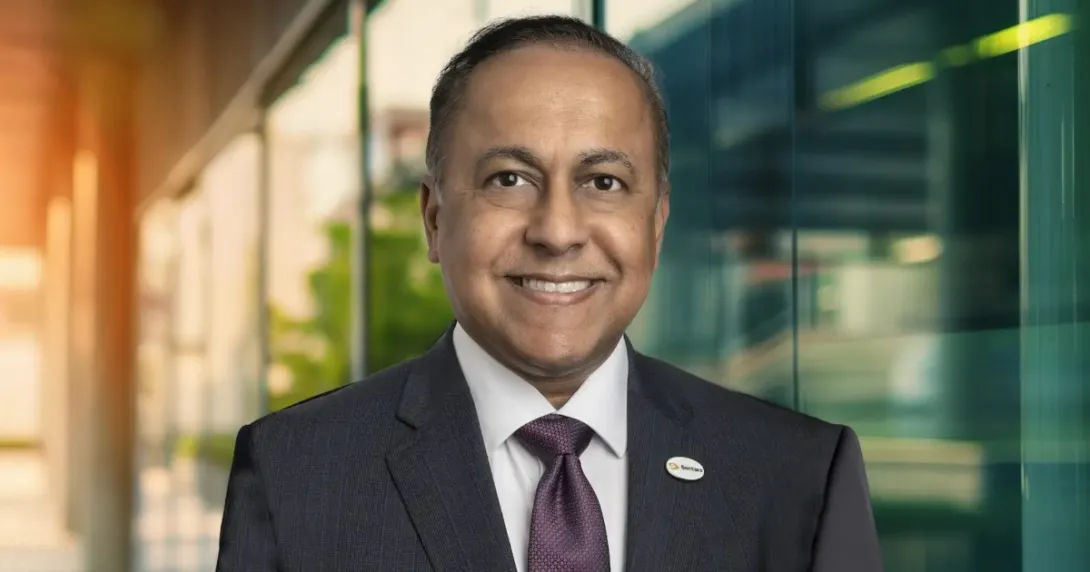
Prasanna Mohanty, executive vice president, president for ambulatory care, and enterprise leader for service lines and population health at Sentara Health
Photo: Sentara Health
Sentara Health is one of the largest health systems in the Mid-Atlantic and Southeast, and among the top 20 largest not-for-profit health systems in the country. With 34,000 employees and 12 hospitals in Virginia and Northeastern North Carolina, it also includes the Sentara Health Plans division, which serves more than one million members in Virginia and Florida.
THE CHALLENGE
Sentara performs a very high volume of imaging across its hospitals, ambulatory sites and emergency departments. Each of the studies may include follow-up recommendations like additional imaging that should happen within a specific timeframe.
Historically, such recommendations were embedded in radiology reports and communicated through traditional channels to the ordering provider. Once the report was signed and delivered, however, the organization had limited ability to ensure every follow-up recommendation was translated into a completed action for the patient.
Like many health systems, Sentara relied heavily on the diligence of individual clinicians, manual worklists and ad hoc tracking methods to close the loop, said Prasanna Mohanty, executive vice president, president for ambulatory care, and enterprise leader for service lines and population health.
"We documented findings and recommendations in our EHR, but it was not designed to systematically extract, prioritize and track follow-ups across multiple facilities and service lines," he explained. "In practice, that meant our teams had to hunt through notes, inbox messages and problem lists – or build their own spreadsheets and reminder systems. It was labor-intensive, difficult to standardize and nearly impossible to scale to an enterprise of our size.
"We were particularly concerned about incidental or 'non-urgent but not optional' findings – lung nodules, adrenal lesions, and other abnormalities that require time-bound follow-up but are easy to lose in the day-to-day crush of clinical work," he continued. "While our internal audits showed dedicated efforts and strong performance in many areas, we also saw variation across sites and specialties and knew we did not have a truly closed-loop, high-reliability process."
From a leadership standpoint, Sentara wanted an enterprise-wide safety net that enables it to identify and track every actionable finding, reduce the burden on clinicians, protect against liability, and ensure no patient fell through the cracks.
"We had a tool that promised follow-up, but failed at delivering a high-reliability, automated path to closing follow-ups," he noted. "We struggled with a highly manual workflow with too many patients flagged for follow-up who did not have a follow-up."
PROPOSAL
When Sentara began looking for a new approach, its goal was not simply to add another worklist. It wanted to redesign radiology follow-up as a high-reliability process. That meant finding a system built on quality improvement principles that could automatically read radiology reports, identify every recommendation for follow-up (regardless of wording or format), and organize information in a way teams could reliably act on, Mohanty said.
"The proposal we ultimately selected centered on applying advanced large language models and orchestrated automation to our radiology reports," he explained. "Rather than asking radiologists or ordering providers to manually flag every follow-up, the technology promised to 'read' reports in real time, detect any recommendation linked to an exam, and enrich that recommendation with context from the EHR."
The system then would route cases to dedicated, automated workflows for review, scheduling and patient outreach.
"Equally important, the system was designed to integrate tightly with our existing EHR ecosystem, particularly our Epic platform, so clinicians could stay in their normal workflows while a separate system handled the heavy lifting of tracking, escalation and analytics," he noted. "We envisioned an enterprise safety net: Every actionable finding would be captured, each follow-up would have a clear owner, and leadership would gain line-of-sight into performance across regions, service lines and sites of care.
"We chose to work with Inflo Health because its platform was purpose-built around that high-reliability vision," he continued. "The vendor's AI engine is trained specifically on diagnostic follow-up recommendations and designed to identify 100% of follow-up needs, automate communication and case organization, and provide robust analytics on completion rates and financial impact."
Before implementation, staff's expectation was this artificial intelligence-based approach would help them significantly reduce missed or delayed follow-ups, improve documentation quality, and give them the data they needed to continuously refine processes.
MEETING THE CHALLENGE
Sentara Health began by implementing Inflo Health's follow-up platform in radiology service lines where the risk of missed follow-up is especially consequential – such as CT and MRI, emergency department imaging, and certain outpatient studies.
Radiologists continue to read and report studies exactly as they always have. Once a report is finalized, the AI engine automatically parses the narrative, identifies any recommended follow-up and creates a structured record of that recommendation.
Those recommendations feed into a centralized, automated follow-up work queue used by the care navigation and imaging operations teams. Within that queue, cases are organized by acuity, modality, site and ordering provider. Navigators can see which patients are due for additional imaging or consults, which recommendations are approaching or past due, and where there may be barriers to completion.
"With one click, they can track the patients who are scheduled and completed through automated pathways, identify patients that require additional outreach or escalation, and initiate the appropriate next step," Mohanty explained.
"Integration with our Epic electronic health record was a critical component of the deployment," he continued. "Inflo connects to Epic through secure interfaces so patient demographics, provider information and scheduling options are available within the follow-up workflow."
Recommendations identified by the AI can generate tasks and messages that appear in standard Epic in-baskets and work queues for clinicians and schedulers. Patient communications – whether through the MyChart portal, SMS, phone calls or letters – are driven by existing tools, but are all coordinated and tracked through the follow-up platform so Sentara maintains a complete audit trail.
"In daily practice, several different groups interact with the system," Mohanty said. "Radiologists benefit from knowing their recommendations are consistently surfaced and tracked, rather than relying on manual callbacks or free-text notes. Imaging leaders and operational managers monitor dashboards that show open versus completed follow-ups, performance by site, and trends in documentation.
"Care navigators and scheduling teams work from prioritized queues instead of reviewing charts one by one," he added. "Primary care and specialty providers are notified when a patient they ordered imaging for has a critical or time-sensitive recommendation, and they can order follow-up studies or referrals directly from within their normal workflow."
Together, these elements have allowed staff to move from a largely manual, fragmented process to an integrated, closed-loop, high-reliability model, he said.
"Technology does not replace clinical judgment; rather, it gives our teams the visibility and structure they need to consistently act on that judgment, even in a high-volume, multi-site environment," he noted.
RESULTS
Sentara Health achieved impressive results with the communication and analytics AI engine.
"Within the first six months of using the platform, 61% of the follow-up appointments managed through this program were completed and directly attributable to the new process," Mohanty reported. "This includes imaging studies, specialty consultations, and other downstream care that might previously have been delayed or overlooked.
"While we are still building our longitudinal data sets, this represents a significant step toward high-reliability follow-up in a relatively short period of time," he added. "The AI-driven workflow has been central to this improvement."
Over that same six-month period, Sentara completed 4,032 follow-ups that can be attributed to cases identified and managed through the new system.
"These are patients who not only received an initial imaging exam, but also completed the additional imaging or specialty care that was recommended as a result," he explained. "For a large health system, this number represents a material volume of potentially high-risk cases where we have greater confidence that care did not stop at the initial report.
"This volume is also important from an operational standpoint," he continued. "Before implementation, we did not have an easy way to quantify how many follow-ups were being successfully completed across the enterprise, let alone break that down by modality, site or timeframe. Having that level of visibility allows us to identify bottlenecks in scheduling, understand which service lines are driving the most follow-up activity, and target process improvements where they will have the greatest impact."
In addition to quality and safety benefits, the health system has seen a measurable financial impact.
"In the first six months, we estimate approximately $1.7 million in revenue is attributable to follow-ups captured and completed through the Inflo-supported workflow," Mohanty said. "That figure reflects downstream imaging, visits and procedures that might otherwise have been missed or shifted to external providers if follow-up had not been actively managed.
"We view this financial return as reinforcing – not competing with – our quality goals," he concluded. "Ensuring patients receive recommended follow-up care helps prevent more advanced disease, supports value-based care initiatives, and strengthens relationships with patients and referring providers. The fact we can demonstrate a clear ROI also makes it easier to sustain and scale the program, invest in additional navigation resources, and expand to new sites and clinical domains."
Follow Bill's health IT coverage on LinkedIn: Bill Siwicki
Email him: bsiwicki@himss.org
Healthcare IT News is a HIMSS Media publication.
WATCH NOW: In 2026, AI will power change in RTLS