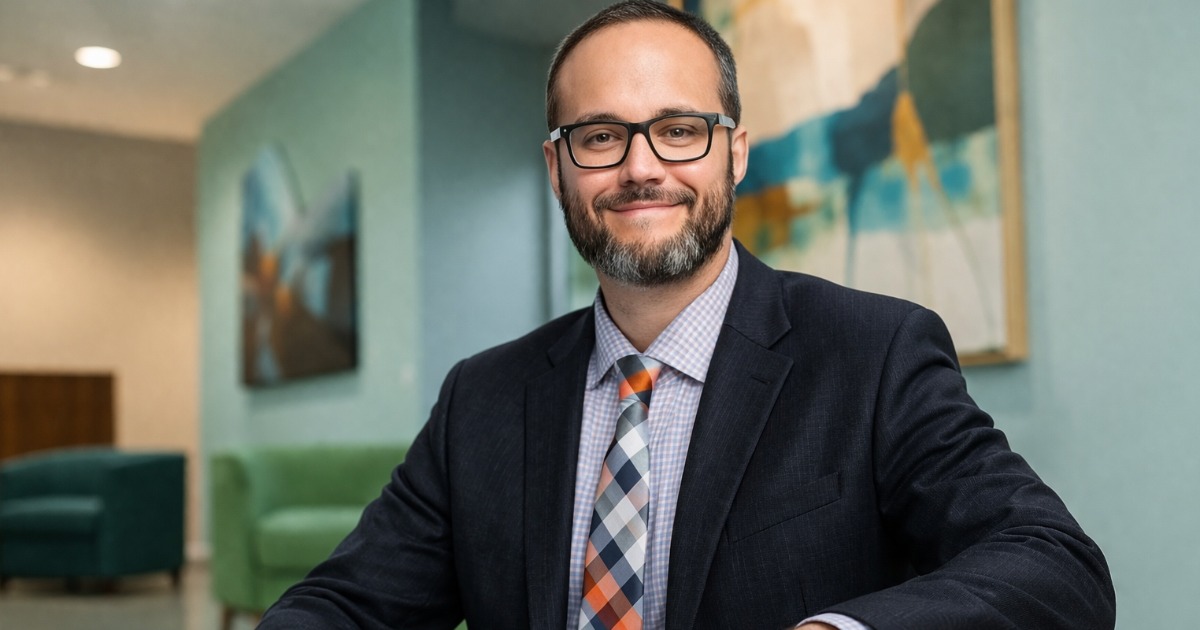
Dr. Brett Daniel, chief medical informatics officer at Optum Health
Photo: Dr. Brett Daniel
Over the years, barbers have asked Dr. Brett Daniel – chief medical informatics officer at value-based care-oriented health services company Optum Health – what it's like to be a clinician and what some of the pain points are. He usually tells them a story like this.
"Imagine that after giving someone a haircut, you have to document all the key points from the random conversation, list every instrument you used for different parts of the hair, note the products applied, record how long it took, and outline a recommended plan for managing their hair until the next appointment," Daniel told the barbers.
"All of this must be done before you can submit the charge and get paid – assuming you didn't leave out any critical details," he continued. "Every barber I've told this to says it sounds crazy. But for clinicians, this is our daily reality, and it's a problem we all need to solve."
THE CHALLENGE
Time spent in notes is a commonly tracked metric in health systems. Optum Health's primary care clinicians in Washington State spend about 70 minutes per day writing and editing notes. More than 10% of the 800 multispecialty clinicians spend more than two hours per day writing notes.
These numbers stand out as a huge contributor to clinician burnout and one of Optum's largest opportunities to bring the joy back to practicing medicine, Daniel said.
"There have been numerous, focused interventions and systems introduced over the years intended to reduce time spent in notes: note templates, prebuilt phrases, keyboard shortcuts, voice-to-text technology, human scribes, dictation services, etc.," he recalled. "Dictation faded away over the years.
"Scribes in-room with the clinician are financially unsustainable at scale," he continued. "Voice-to-text technology and templates work great for some, but the time spent is still substantial. Prebuilt phrases add key content but tend to lengthen notes without saving much time. We needed to find something new."
PROPOSAL
Ambient documentation technology, or ADT, "listens" to a visit with a patient through a connected mobile device and constructs an initial note for the clinician. Earlier versions of this technology were often just remote scribes, but the newer versions use artificial intelligence to create a note that captures the relevant patient history, exam, diagnoses and plan.
"The note often is created within a minute of completing the visit, and the clinician then reviews the note for any errors or omissions, or to add more details," Daniel explained. "The system also is trained to differentiate between pertinent medical information and small talk, so instead of having to recall details, parse out content and write the entire note, a clinician now becomes more of a reviewer and editor."
MEETING THE CHALLENGE
Over the past six or so months, Optum has rolled out DAX CoPilot – from vendors Nuance and Microsoft – to thousands of clinicians across its network who use one of the organization's Epic EHR instances. Integrated into Epic's secure mobile app, Haiku, the technology syncs with the patient visit.
After clinicians obtain consent from the patient to use the technology, they let CoPilot listen to the visit in the background and construct the note behind the scenes. This technology intelligently excludes irrelevant conversation from the note. Several clinicians shared stories of amazement at how well CoPilot filtered out social and tangential conversation from the clinical documentation, Daniel said.
"During the visit, clinicians fully engage with the patient without being tied to the keyboard," he noted. "We train users to sharpen accuracy by clearly relaying exam findings and summarizing the diagnosis with their assessment and plan. During wrap-up or shortly after the visit, clinicians quickly generate the note, review it and make edits before moving on to the next patient.
"In the Pacific Northwest, we rapidly transitioned existing remote scribe users onto CoPilot," he continued. "Overall satisfaction rose with the newer AI-ambient technology due to its faster turnaround and, at times, better initial accuracy. We've gradually added more users over time and will continue to do so in 2026."
In some groups migrating onto Epic from their historic EHR, Optum has taken a faster approach by implementing CoPilot at scale during go-live. Clinicians have responded well to this strategy, which reduces the need for note personalization and shortcut building typically seen during go-live.
"In the ambient world, those steps are no longer necessary," he explained. "This approach also sets a new standard for completing visits during a time of change and creates a strong opportunity for organizations to take full advantage of support from go-live teams."
RESULTS
Daniel said Optum's experience with ambient documentation is on par with the rest of the industry.
"We see a one-to-two-minute decrease in time spent documenting each visit," he reported. "The more a clinician uses the service, the more time they save. While it does not sound like much, this ends up saving 1-2 hours per week for most of our users. Much of this saved time is often spent after clinic hours or at home later in the evening.
"What's most interesting is that subjective survey responses estimate six minutes time saved per note," he continued. "As we explore these reports, we find clinicians perceive a greater time savings than we actually observe, largely because they feel less cognitive burden and no longer need to retain visit details for later documentation."
In Optum user surveys, more than 90% of clinicians report a reduction in cognitive burden.
"Patient experience also improves," he said. "Clinicians spend more time directly engaging with a patient instead of the keyboard. As a result, more than 70% of clinicians report increases in patient satisfaction. Anecdotally, we have also seen increases in Press-Ganey patient-reported satisfaction scores for clinicians who start using ambient.
"Although not required for use, we've observed that clinicians using ambient documentation often see more patients per clinic day," he continued. "While this varies by provider and clinic, most typically see 1-3 additional patients daily after adopting the technology. And again, use of ambient listening is only done with patient permission."
ADVICE FOR OTHERS
This new normal is laying the foundation for voice-centric user interfaces in the EHR, Daniel said.
"Tasks like ordering labs, changing medications, placing referrals, requesting summaries of results, setting follow-up ticklers and scheduling are either already live or rapidly going live as this technology integrates into more aspects of clinical workflow," he reported.
"Recognize that ambient scribing is by no means a perfect solution – set expectations as trust is established," he advised. "Ensure a human remains directly involved in reviewing and editing the note to reduce unintended errors and to help train the system. Remember, the clinician is still responsible for the content of their note and must remain vigilant."
Optum also sees occasional hiccups in connectivity or processing that temporarily halts the service or stalls the processing. Establish rapid communication and feedback channels to alert and update users when these outages occur – robust downtime alternatives may help assuage concerns in this time of change, he said.
"Device management also becomes a bigger challenge if your ambient documentation program relies on business-owned devices, whether by design or clinician preference," he noted. "Device costs add to the overall expense, and configuration of multifactor or other security requirements require clinician time and occasionally at-the-elbow support.
"As more clinicians adopt the technology, it will create pressure to modify standard templates, workflows and other processes," he added. "This shift may affect how teams gather information before a visit, room a patient and record details in a template – potentially causing some duplication until the tools fully integrate into the EHR workflow."
Daniel encourages all organizations to get started using ambient documentation technology.
"Now is the time to establish a strong foundation so we are prepared to adapt and keep up with the rapid evolution before us," he concluded.
Follow Bill's health IT coverage on LinkedIn: Bill Siwicki
Email him: bsiwicki@himss.org
Healthcare IT News is a HIMSS Media publication.
WATCH NOW: Seattle Children's Chief AI Officer talks better outcomes through the technology