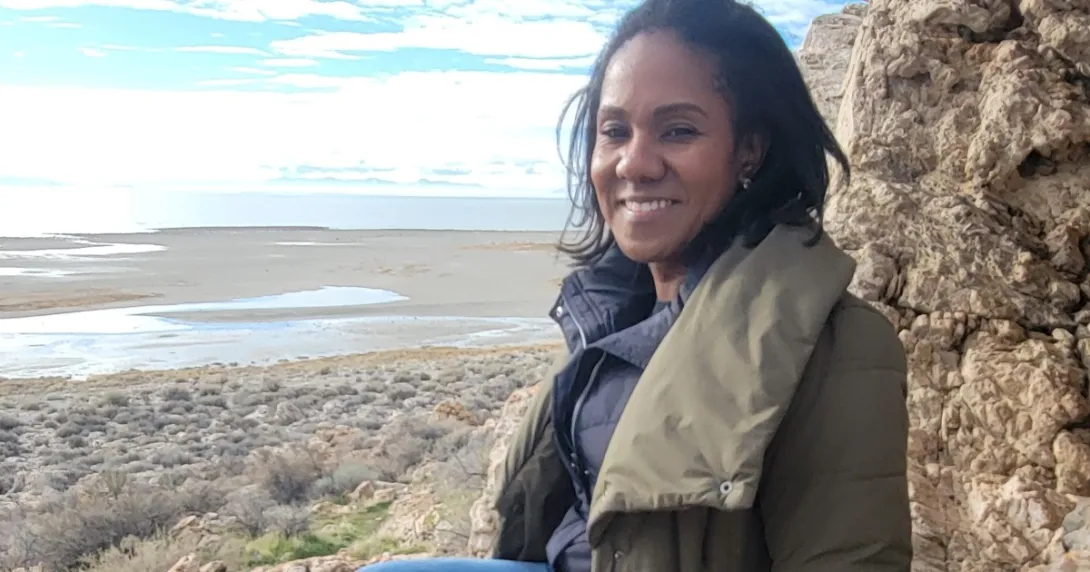
Dr. Sharica Brookins, founder of Remote Renal Care, Georgia's first telehealth kidney practice
Photo: Dr. Sharica Brookins
In Georgia, the National Kidney Foundation estimates 1.2 million adults have chronic kidney disease, or CKD. However, only about 147,000 of those individuals are aware they have it.
Kidney disease often is referred to as a "silent" disease because symptoms don't start to show until it has progressed to its most serious stages. The disease takes a toll on patients emotionally, physically and socially, and these challenges are compounded for rural patients who typically have less access to care or specialists.
Kidney care in Georgia is shaped by a significant geographic divide, with approximately 75% of the state classified as rural. Rural Americans are 2.7 times more likely to develop CKD than those in urban areas. Many rural communities in Georgia have no kidney specialists at all.
Dr. Sharica Brookins is founder of Remote Renal Care, Georgia's first telehealth kidney practice, and a graduate of Meharry Medical College, a Nashville-based HBCU. Healthcare IT News sat down with her for a conversation on how she has been aiming to curb the kidney care problem in Georgia through telemedicine.
Q. You founded the telehealth practice in 2018. What was your goal, and have you attained that goal? Also, how were you being reimbursed back then?
A. I founded Remote Renal Care as the first 100% telehealth kidney practice in Georgia to address these exact barriers. My primary goal was to help bridge the gap by providing subspecialty care to rural areas where residents lacked local access to nephrologists.
When my first child was born 12 weeks early, the emergency maternity leave I had to take revealed a heartbreaking gap in our healthcare system. My patients in rural Waynesboro were left stranded without me.
They lacked transportation to reach the city for appointments, and no specialists were able to travel to them. This crisis became my calling. I transitioned to telehealth to ensure patients who feel most forgotten have consistent, reliable access to subspecialty nephrology care.
Predating the COVID-19 telehealth boom, I founded Georgia's first nephrology practice to operate entirely via telehealth. While the reimbursement landscape was much more restrictive to those enrolled areas, I was already proving 100% virtual kidney care was not only possible, but essential.
This level of commitment to patients was instilled in me at Meharry Medical College, a historic 150-year-old institution. It was there, under the guidance of mentors like Dr. Faulkner, that I first discovered my passion for nephrology and embraced the Meharry mission: that serving the community is just as vital as the work we do within the clinic walls.
Q. Today, you work with the VA and mobile health clinics to bring kidney care directly to underserved communities and expand access to home dialysis and transplant options that often are out of reach. Please describe your work here and the kinds of outcomes you're seeing.
A. We are a community care partner for the VA throughout the state of Georgia. If there isn't a VA clinic in your town, or if your wait time is longer than 28 days, you qualify to see us. The VA knows how important it is for veterans to get scheduled quickly, so we work alongside them to provide immediate access to care.
We also saw a rise in much-needed mobile clinics after COVID, but it's important to remember how rare these used to be. Pre-COVID, telehealth didn't mean staying home, you actually had to travel to a primary care office. You'd go into a designated room for a tele-visit with a specialist, like a neurologist or dermatologist.
During COVID, the model shifted. We realized the impact of taking care directly to the community rather than making patients come to the office. Now, we have mobile clinics equipped with high-tech cameras and telecommunications.
These units travel into rural communities on set days, allowing patients to receive subspecialty care – like telecardiology or telenephrology – allowing subspecialty visits to take place right where the patients live.
And we've seen encouraging outcomes as a result of these initiatives – most notably, a very low no-show rate to appointments because the convenience of virtual care removes the common obstacles of transportation and travel time. Shortening the wait for care also helps to reduce patient anxiety, and we're able to start effective treatments much sooner than the traditional model allows, which is critical for kidney disease.
Q. Remote patient monitoring is becoming a more important – and reimbursable – part of the telemedicine arena. Please talk about your work in RPM with home dialysis.
A. Remote patient monitoring has become a cornerstone of my work, particularly as we manage patients in their home environments. I encourage my patients to maintain a scale and a blood pressure cuff at home, which empowers them to take ownership of their health while providing me with the data needed to dictate changes in their care plans. This monitoring is essential because kidney health is so closely tied to managing chronic conditions like diabetes and hypertension.
RPM is also vital in managing home dialysis patients. This can involve daily weights and blood pressure checks. Home dialysis patients are seen in person in the home dialysis clinic once a month. Since 2018, home dialysis patients have the option to be seen in person once a quarter with the remaining visits using telehealth.
Home dialysis patients have better outcomes and more coordinated care in their dialysis plan. Many rural areas lack home dialysis centers. RPM and telehealth visits allow for more rural residents the opportunity of home dialysis.
Q. What are some practical strategies for providers gleaned from your years of experience to use technology and work with vendors to close care gaps?
A. The most practical strategy for providers to close care gaps is to leverage existing local infrastructure. Instead of requiring patients to travel for every diagnostic need, we coordinate with their local rural hospitals or primary care labs for blood work and imaging, ensuring they only have to travel minutes from home.
Additionally, I have found that community engagement through something as simple as a "lunch and learn" session at the local church and senior center is vital for bridging the digital divide. Engaging with the community often opens the door to teach patients what questions to ask their providers and help them feel comfortable navigating the technology that brings specialized care into their lives.
Finally, we must continue to advocate for broadband expansion in rural areas to ensure technology remains an accessible bridge rather than a barrier.
Follow Bill's health IT coverage on LinkedIn: Bill Siwicki
Email him: bsiwicki@himss.org
Healthcare IT News is a HIMSS Media publication.
WATCH NOW: Virtual health produces outcome differences


