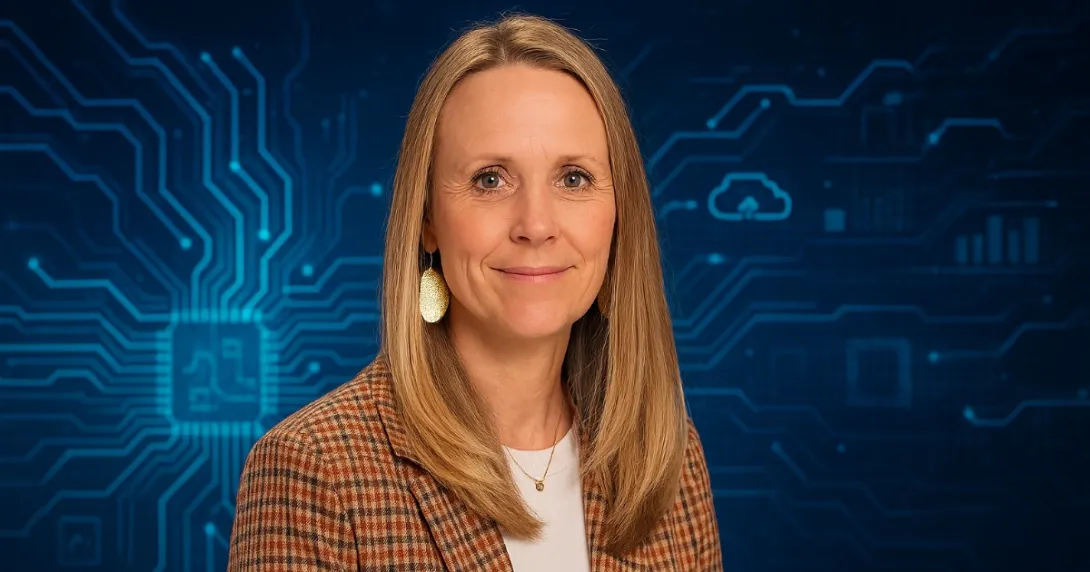
Nadin Knippschild, DNP, RN, assistant vice president and CIO at Catawba Valley Health System
Photo: Catawba Valley Health System
Nadin Knippschild, DNP, RN, is assistant vice president and CIO at Hickory, North Carolina-based Catawba Valley Health System, a small, not-for-profit independent healthcare organization. As such, she believes her health system's foremost health IT priority is to responsibly harness advanced technologies like artificial intelligence while maintaining unwavering cybersecurity – especially as the organization migrates more data and services to the cloud.
"In a rapidly consolidating industry, our independence hinges on being innovative yet resilient," she explained. "We face intense financial headwinds – nearly 37% of U.S. hospitals continue to operate in the red, and expenses for medical supplies and technologies are rising faster than reimbursement. This challenging landscape makes AI's promise of efficiency and insight extremely compelling.
"Smart use of AI can help us do more with less: automate routine tasks, optimize clinical workflows and support our stretched workforce," she continued. "For example, AI analytics can flag care gaps or predict patient surges, so we deploy resources more effectively. It's telling that about 70% of healthcare CIOs plan to ramp up data analytics and AI initiatives – as a community, we see data-driven innovation as key to delivering better care under tight constraints."
Just one cyberattack
At the same time, however, every step forward in digital transformation enlarges a healthcare organization's attack surface. A single cyberattack could cripple operations and erode patient trust overnight.
"That's why cybersecurity must advance hand-in-hand with AI and cloud adoption," Knippschild stated. "In fact, cybersecurity has become the top strategic initiative for nearly two-thirds of healthcare CIOs, recognized now as fundamental to patient safety and business continuity. Blending these priorities isn't optional – it's the only path to a sustainable, independent future.
"In my role, I feel our most important challenge is striking the right balance: leveraging AI and cloud technologies to transform care and efficiency, while rigorously protecting our systems and data against ever-increasing threats," she continued. "I hold this view because the stakes are extraordinarily high on both fronts."
Used wisely, AI could help solve critical industry problems – from clinician burnout to improving quality – and thus, strengthen the mission-driven care Catawba Valley provides as a community health system, she said.
"But used hastily or without safeguards, the same technology could introduce errors or inequities," she continued. "We've all seen the hype around generative AI, for instance, but also the concerns about opaque black-box algorithms and potential biases in patient care. Responsible AI isn't just a technical issue; it's an ethical one.
"We feel a duty to ensure any AI that influences clinical decisions is transparent, validated and aligns with our care standards," she added. "Meanwhile, the cyber threat environment is more dangerous than ever, especially as health data moves into hybrid cloud environments. Hospitals have become prime targets for ransomware gangs because disrupting care can be literally life-threatening – and attackers know organizations might pay hefty ransoms to restore critical services."
At best, a cyber incident causes costly downtime. At worst, it endangers lives. And beyond immediate disruptions, breaches come with long-term fallout – significant cost in damages and reputational loss.
"In summary, the convergence of AI-driven opportunity and cyber risk defines the current health IT era," Knippschild said. "We must innovate to remain viable and independent, but we cannot afford to be naïve about security. By treating AI and cybersecurity as two sides of the same coin, we position our health system to improve care and efficiency without compromising the trust our community places in us."
What health IT leaders can do
For her fellow health system leaders facing the dual mandate of digital innovation and cybersecurity, Knippschild emphasizes they should establish a robust governance framework that treats innovation and security as inseparable.
"Make sure you have a formal process – an innovation, IT or AI steering/governance committee – to evaluate new technologies for both their potential value and their risks," she advised. "This means involving cross-functional experts – IT, clinical, security, legal, finance – to ask tough questions before a new AI tool or cloud platform is rolled out.
"Clear governance will help you prioritize high-impact, safe technologies and avoid chasing every shiny new object," she continued. "Just as important, set explicit ethical guidelines for AI in your organization: for example, policies on algorithm bias, transparency and validation of AI recommendations. Leaders need to signal that we welcome innovation, but only within guardrails that protect patients and data."
At the same time, don't let governance become a code word for inaction – the goal is to enable responsible agility, she added.
"We should champion pilot programs and sandbox environments to let clinicians and staff experiment with AI-driven ideas, while containment measures keep any risks in check," she explained. "By doing this, one can cultivate innovation and keep it aligned with the organization's mission. Remember, in healthcare, digital progress must be married to digital trust: If frontline providers or patients lose confidence in a new system's safety, adoption will stall.
"Strong governance, therefore, isn't bureaucracy – it's how leadership ensures advanced technologies solve problems and are worthy of trust," she concluded.
Follow Bill's health IT coverage on LinkedIn: Bill Siwicki
Email him: bsiwicki@himss.org
Healthcare IT News is a HIMSS Media publication.
WATCH NOW: Closing the medication information gap with AI