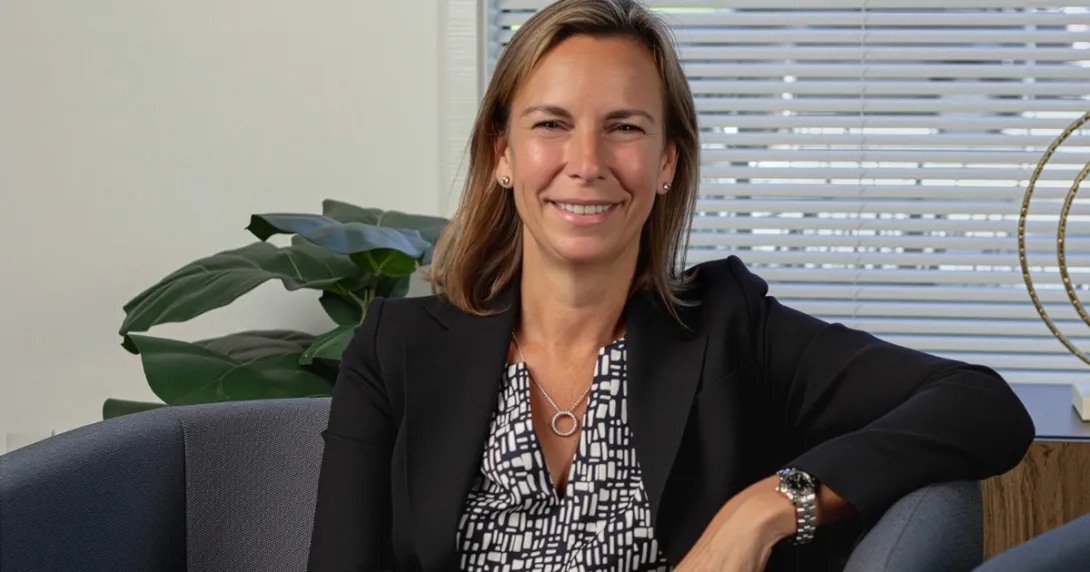
Tracy Gayeski, Psy.D., chief health officer at Catalight
Photo: Tracy Gayeski, Psy.D.
California-based Catalight is one of the nation's largest behavioral health networks, serving more than 24,000 individuals with autism and intellectual and developmental disabilities (I/DD) annually through nearly 900 employees across its family of companies and a network of more than 16,000 practitioners. The network focuses on value-based care.
THE CHALLENGE
Like most provider organizations before the COVID-19 pandemic hit in 2020, Catalight relied almost entirely on in-person services, delivering everything from intake to diagnostic evaluations and ongoing therapy face to face.
With the pandemic, that model was brought to a standstill overnight. The most urgent challenge was practical: How could the organization maintain continuity of care for families already navigating significant needs while safeguarding both patients and providers? Yet just beneath that urgency lay a much larger realization.
The shift to telehealth, born out of necessity, ended up transforming the provider network's entire model of care by driving greater access, flexibility and caregiver empowerment – changes that ultimately positioned it for long-term success, said Tracy Gayeski, Psy.D., Catalight's chief health officer.
PROPOSAL
"The pandemic forced what might have otherwise been a years-long transition into a matter of weeks," she recalled. "In just weeks, we stood up a secure, HIPAA-compliant virtual workflow that enabled intakes and treatment sessions to continue followed by diagnostic assessments.
"We began with services most easily translated to video and quickly extended to standardized diagnostic evaluations once validated tools were available," she continued. "Our transition was not just a fast pivot – it redefined what 'responsive' could look like in behavioral health and autism care. The pace of this change altered expectations across our system and demonstrated the potential for more flexible and tailored family-centered systems."
For patients and their caregivers, the impact was profound. Families living with autism often face relentless demands: lack of location options for services, rigid schedules, challenging behaviors, travel burdens and the constant cycle of treatment. Today, Catalight's telehealth services alleviate many of these pressures and is one of the ways the organization is meeting families where they are.
"Parents now choose which services make sense – in-clinic, in-home or virtual – reducing stress for children who may find clinical environments overwhelming and also giving clinicians valuable new insights by observing children in their natural home settings," Gayeski explained.
"For diagnostic assessments, some families living in remote areas previously endured long drives and even overnight stays at a hotel to access these appointments quickly," she added.
"Now, families can have all these same services without leaving home," she continued. "What began as a constraint-driven change revealed a more family-aligned and sustainable way of delivering care and wellbeing to our patients. That's proved very powerful for the population we serve – individuals, predominantly children, living with autism or I/DD."
Telehealth also helped break down longstanding barriers to equity. Interpreter services and multi-party conferencing became more seamless in a virtual environment, ensuring caregivers across different households could engage without logistical hurdles.
"Everyone involved can hear the same information at the same time, fostering stronger collaboration that is critical in autism and I/DD care," she noted. "While we continue to offer in-person services wherever needed or preferred by caregivers, the pandemic showed us that hybrid is not a temporary fix but a powerful option for care.
"Guided by family needs and preferences, telehealth has been an enabling force for Catalight's innovative care model, which delivers accessible personalized care and wellbeing for individuals with autism and I/DD and their families," she added.
Staff developed the telehealth technology stack in-house with the support of its IT team. This team understood the clinical workflow, which significantly accelerated the ability to transition into virtual behavioral health services.
"Our foundation was a HIPAA-compliant telehealth system supported by homegrown technology that allows for scheduling, consent and documentation workflows," Gayeski explained.
"The goal in 2020, across a few-week push, was to recreate a virtual clinical journey end-to-end, supporting timely outreach, easy scheduling and rescheduling, automated reminders with visit links, digital intake and consent, and seamless handoffs between care teams.
"For diagnostics, which entail a variety of tests for our patients, we selected and validated telehealth-appropriate assessment measures, leveraging current research and partnerships," she continued. "That meant conducting comprehensive caregiver interviews via video and using standardized behavioral and cognitive tools designed to work reliably in a home setting."
Fast forward several years later, Catalight recently invested in enabling technology to remove friction for both clinicians and families. An ambient AI note-taking system from vendor Nabla now captures and summarizes session notes in the background, so clinicians can stay present with caregivers and children. Notes are reviewed and finalized by the provider and flow into the clinical documentation and care coordination system.
On the caregiver side, the organization has an app that is popular and heavily relied upon by caregivers and practitioners. It provides a secure "one-stop" for messaging the care team, viewing treatment goals and plans, uploading short videos (for example, to capture challenging behaviors in context), and contributing structured data between visits – which are key to the caregiver-mediated program.
The caregiver app is in use by select providers and Gayeski expects to roll this out more broadly in the future.
MEETING THE CHALLENGE
The vast majority of families begin with a telehealth intake. After a referral arrives, the customer service team contacts the family within one to two days and offers the first appointment within 10 days.
Licensed mental health practitioners conduct a biopsychosocial assessment over video and recommend the next step: diagnostic evaluation, treatment or a different service. That first touchpoint is deliberately virtual because it's faster and less disruptive for families.
"Clinicians complete detailed medical and behavioral histories with caregivers, then proceed to standardized, telehealth-validated behavioral observations and assessments," Gayeski explained. "Families receive secure links, digital forms and clear prep guidance in advance. Interpreter services or additional caregivers can be added into the same session with a click. The ability to observe in the child's natural home environment has proven to be a true clinical advantage.
"For ongoing care, we offer options to families, with most choosing a personalized hybrid approach," she noted. "Telehealth is particularly well-suited to caregiver-mediated treatment, in which clinicians teach parents to implement new strategies to help them parent differently."
The app supports that loop. Caregivers message the team, log progress and upload short clips that clinicians can use to refine care plans. On the back-end, Nabla's ambient documentation accelerates clinician note-taking. Finalized notes and care coordination assets live in the tech documentation platform, which orchestrates scheduling, workflows and case management.
"The telehealth system helps our teams by virtualizing our in-person workflow; integrating secure video, documentation, consent, communication and provider care; and enabling caregiver mediation to drive wellbeing for patients and their families," she added.
RESULTS
Time-to-care and greater access are big gains for Catalight.
"Today, 99% of families are offered care within 10 days," Gayeski reported. "That's roughly 80% faster time-to-care than national norms. Telehealth is helping maintain this percentage due to its convenience, fewer scheduling constraints, and accelerated virtual intake and onboarding.
"Equally important, 93% of families now use telehealth in some form," she continued. "In our area of autism and I/DD care, this means families with already complex daily lives don't have to get in a car and travel for their care.
"For some who live far from physical assessment clinics, for their assessment appointments – which are long in length – offering a telehealth option eliminates the need for these families to take time off work, arrange childcare for siblings, or manage long drives and even overnight stays to access the care they deserve."
Caregiver empowerment is another success stemming from telehealth.
"41% of families use caregiver-mediated treatments, with 66% of new clients opting for this approach," Gayeski said. "Telehealth is enabling caregiver-led training by making it more convenient compared to in-person sessions.
"And we've achieved success with patient experience," she added. "Our customer satisfaction score sits at 4.34 out of 5, outpacing national behavioral health benchmarks. Notably, we see no meaningful difference in CSAT between telehealth and in-person care. In fact, in many cases, caregiver-mediated treatment – which telehealth enables – yields even higher satisfaction."
Ultimately, Catalight, with telehealth and some AI mixed in, has achieved a more sustainable model that delivers quality outcomes, greater access and affordability, Gayeski stated.
"While affordability is not our motivation, our data shows a 30% reduction in care costs alongside quality gains," she reported. "That's not the result of cutting corners. We have learned that leading with quality and our personalized approach has significant downstream benefits including increased patient/caregiver satisfaction and trust, greater efficiency, and lower costs.
"Telehealth is enabling our tailored model," she continued. "With it, we are essentially able to support the needs of a child and caregiver anywhere."
Follow Bill's health IT coverage on LinkedIn: Bill Siwicki
Email him: bsiwicki@himss.org
Healthcare IT News is a HIMSS Media publication.
WATCH NOW: Details on managing the EHR post-go-live period from an Epic Emeritus CMIO


