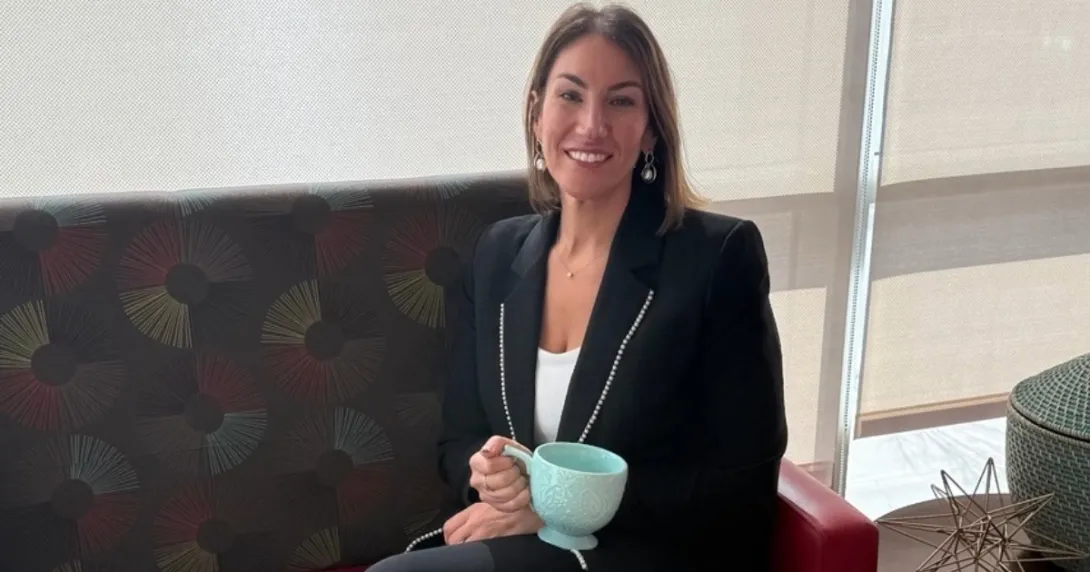
Brandi Clark, vice president, digital care, OSF OnCall, at OSF HealthCare
Photo: OSF HealthCare
Brandi Clark is vice president for digital care at OSF OnCall, the virtual urgent care service of Peoria, Illinois-based OSF HealthCare.
OSF Healthcare is a member of the American Telemedicine Association Center of Digital Excellence – and Clark received the ATA's 2025 Leadership in Care Transformation Award. Considering the virtual care innovations they've pioneered, it's not hard to see why.
THE CHALLENGE
OSF HealthCare has had a pregnancy and postpartum remote patient monitoring program up and running for nearly four years. The initial catalyst was an understanding that the health system had an opportunity to think about the way it could engage with patients differently, using digital and virtual means to improve outcomes for patients.
"We initially were targeting women in the state of Illinois who have Medicaid," Clark recalled. "And the reality is that access to prenatal care is ever dwindling in the state of Illinois. We have maternity deserts all over the state. So, a lot of individuals are showing up to our emergency departments to deliver a baby, having had very little or no prenatal care.
"That is not an optimal situation for either the mom or the baby," she continued. "The problem to be solved was to understand how we engage people, give them another option for how they can engage in care, to close those gaps."
PROPOSAL
With remote patient monitoring programs, there can be the belief among patients and providers that digital care is impersonal and that the personal touch with patients will be lost when not interacting with them in person, Clark said.
"We've built programming that takes a layered approach and gives individuals access to information and resources and a way to connect with us digitally and virtually, 24/7," she explained. "So, the platform we use automatically engages with the patient on a regular basis, asks them how they're feeling, asks them to submit information like their blood pressure or weight, so we can continue to monitor throughout the pregnancy.
"It also gives the patient access, either via chat or phone, to our clinical team 24/7/365," she continued. "So, if they have a question, if they have a concern, they can text us or call our phone number, and our team engages with them whichever way they prefer and can help answer their questions."
Sometimes, it's alleviating concerns. Sometimes, it's escalating to a full triage. And maybe that patient needs to be escalated to see a provider.
"We have providers 24/7 who can see the patient virtually, so they never have to leave their home until or unless it becomes very necessary to seek that higher level of care," she added.
MEETING THE CHALLENGE
OSF HealthCare – which on another front has had standout results in artificial intelligence – uses a third-party vendor platform for RPM. This technology allows a patient to have either a web-based or an app-based experience on their mobile device that gives them the ability to interact digitally and provides automated outreach.
"All of the care provided by our care team, as they see the interaction with the patient in the platform, if we escalate a patient to a visit with us, all of that care that is provided is documented in the electronic health record," Clark noted. "So that's first and foremost. As well as any vital information.
"If the patient is submitting their blood pressures, for example, that information flows through an interface into our EHR," she continued. "That information lives in the EHR so other providers on the care team who may interact with the patient and provide care to them as well in person also have access to the information that has been provided through the platform and any care that's been provided by the digital team."
RESULTS
First and foremost, what OSF HealthCare has seen with the pregnancy and postpartum remote patient monitoring program is an incredibly high enrollment and engagement rate. This population of patients is very engaged with the technology.
"More than 80% of the patients we reach out to, to enroll in the program, do enroll," Clark reported. "And then, more than 75% of those who enroll are actively engaged throughout that first six weeks postpartum that we monitor those patients.
"We also collect information from patients on their experience," she continued. "We use a Net Promoter Score and have over time maintained nearly an 80 Net Promoter Score, which is very high."
Clinically, OSF HealthCare – which elsewhere has stacked up wins with provider data management technology – is looking to reduce adverse events and improve clinical outcomes for patients and their babies. The health system is looking at things like pre-term birth, low birth weight, length of stay in the hospital and readmissions to a hospital.
"That becomes much more difficult data for us to track," Clark noted. "So, we continue to work on gathering that data because only about half of the patients we take care of deliver a baby within one of OSF's delivering facilities, because women may deliver all across the state of Illinois.
"We struggle to get to a complete set of outcome data," she continued. "But for those patients who we are able to measure the outcomes for, we continue to see improvements in those clinical measures."
Click here to watch a brief video of bonus content with Brandi Clark offering predictions on telemedicine and remote patient monitoring technologies and reimbursement for the year ahead.
Follow Bill's health IT coverage on LinkedIn: Bill Siwicki
Email him: bsiwicki@himss.org
Healthcare IT News is a HIMSS Media publication.
WATCH NOW: AI advancements to boost RPM in 2026, telehealth expert says


