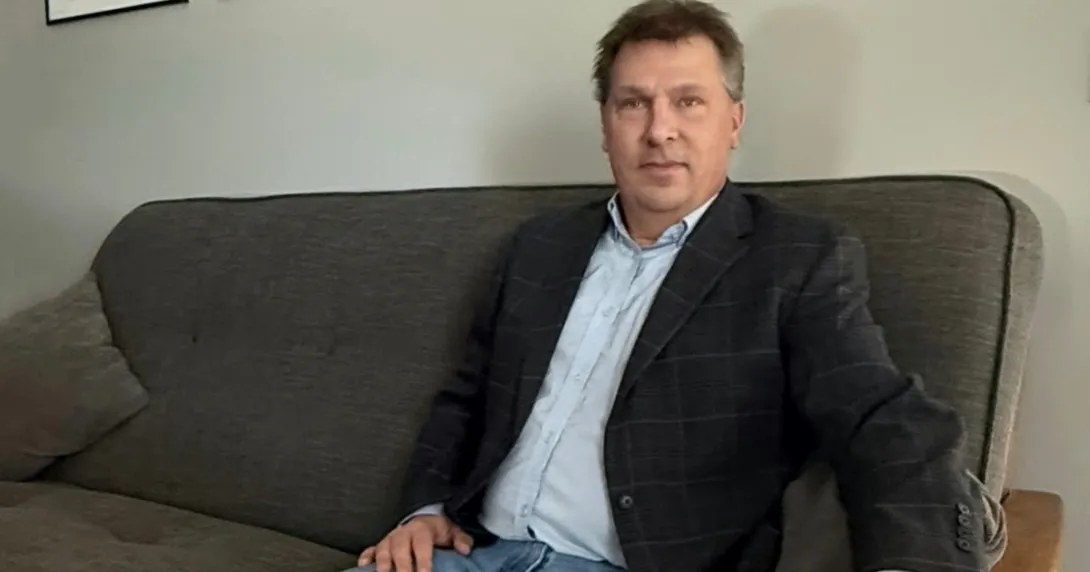
Darrell Bodnar, CIO at North Country Healthcare
Photo: Darrell Bodnar
North Country Healthcare is an alliance of three critical access hospitals and a home health and hospice agency serving the northernmost region of New Hampshire.
THE CHALLENGE
Based on CDC studies, staff found that about 75% of urinary tract infections developed in hospitals are associated with a urinary catheter.
"As a 'high reliability organization,' we wanted to ensure we were doing everything we could to prevent catheter-associated urinary tract infections, or CAUTI, and other UTIs," said Darrell Bodnar, CIO at North Country Healthcare.
A high reliability organization is defined as an entity operating in complex, high-hazard environments such as healthcare that consistently avoid catastrophic failures despite high risk. They maintain exceptional safety by cultivating a culture of "mindfulness," where workers at all levels are empowered to identify, report and correct potential errors before they become disasters.
"Our nurses wanted a more standardized approach to documenting when ensuring that indwelling catheters and central lines were being removed from patients to confirm they were removed before the risk of infection dramatically increased," Bodnar recalled.
"Improving clinical documentation in our EHR would be necessary to make sure nurses could easily see which patients were due for catheter removal," he continued. "In addition, the amount of time needed to create reports was one of NCH's biggest obstacles to improving catheter management. Nurses were spending approximately 50 hours per month manually tracking and extracting line and drain data from charts for National Health Safety Network reporting – a frustrating and often inaccurate process."
PROPOSAL
The alliance launched its staff-initiated "Lines and Drains" project to improve tracking of indwelling urinary catheters and central lines at each of its three hospitals.
"While we leveraged our existing Meditech Expanse electronic health record and clinical systems, the improvement in our CAUTI outcomes was not driven by new technology or a single tool," Bodnar explained. "Instead, it was driven by how we used the data already available to us.
"We focused on transforming existing clinical, documentation and medication administration data into actionable, real-time information that clinical teams and leaders could actually use," he continued. "It was also important for NCH to place guardrails around how clinicians were entering orders."
Accountability was a critical component, but it was intentionally balanced with recognition and support, he added.
"It was to ensure nursing managers had transparent, objective data that allowed them to understand performance trends across individuals and units without relying on anecdotal observations," he noted. "This would create fairness, clarity and trust in the process. Equally important was to celebrate the wins at every level.
"Positive performance was shared, recognized and reinforced, helping teams see that their efforts directly contributed to safer patient outcomes," he continued. "This approach strengthened ownership and engagement while reinforcing the expectation that high-reliability behaviors are non-negotiable. Over time, this accountability structure helped normalize best practices and sustain improvement across the organization."
This approach also created immediate feedback loops. When performance was strong, it was recognized and reinforced. When gaps were identified, they were addressed promptly through coaching and education rather than delayed audits or punitive reviews weeks later.
"By embedding accountability directly into daily nursing operations, we would ensure that CAUTI prevention was not an abstract quality goal, but a routine part of clinical practice," he said.
MEETING THE CHALLENGE
All process changes were made directly within the Meditech Expanse EHR. Key improvements of this project included leveraging the vendor's inherent flexibility to modify screens according to staff's needs, Bodnar said.
"We addressed instances where nurses' worklist items didn't link to provider orders or where catheter removal was accidentally documented in free text, which had been preventing NCH from collecting accurate data," he explained. "The project also focused on creating policies aligned with CDC guidelines for indwelling urinary catheters and central lines.
"By integrating urinary catheter data, nursing documentation and barcode medication administration events, we created a comprehensive, real-time view of catheter-related care activities," he continued. "This allowed us to move beyond retrospective reporting and into daily operational awareness."
The technology served as the foundation, but the real value came from how staff structured workflows and expectations around that data to support safer, more consistent care, he added.
The most significant change was shifting from passive reporting to active, daily performance management within the integrated EHR and business and clinical analytics system.
"We designed workflows that enabled nursing leaders to review catheter-related practices and medication administration compliance every day, at the individual nurse level," Bodnar noted. "This included clear visibility into dates, times and completion of required actions tied to catheter care.
"In addition, an infection prevention team assessment screen within Meditech Expanse is used daily to document infection control-related items like isolation precautions, line types and urinary catheter use," he added. "This assessment includes documenting whether catheter removal was requested, and tracking culture results and antibiotic use to ensure appropriate treatment."
RESULTS
The "Lines and Drains" project was a big success, achieving 100% compliance in documentation across all NCH locations, up from an initial 20%. In addition, the organization has had zero instances of CAUTI for more than eight months since the initiative began.
"Additionally, the time it takes to compile reports across our three locations dropped from 50 hours to under four hours, saving significant time," Bodnar said. "Reports from the EHR included catheter, central line, PICC line and medication/chemotherapy port data. A dashboard in the business and clinical analytics data visualization system provided additional correlated and cross-referenced data.
"Our CAUTI improvement work was intentionally aligned with 'high reliability organization' principles, particularly sensitivity to operations, preoccupation with failure and deference to expertise," he continued. "By using real-time data and daily review processes, we were able to identify small deviations before they became adverse events, reinforcing a proactive rather than reactive safety culture."
Importantly, this work was implemented system-wide, not locally.
"Standardized workflows, shared metrics and consistent expectations ensured that CAUTI prevention practices were applied uniformly across all facilities, reinforcing reliability, reducing variation and strengthening patient safety regardless of where care was delivered," Bodnar reported. "This same real-time, data-driven operating model was also extended to barcode medication administration, using existing system data to provide daily performance visibility and leadership oversight.
"Through disciplined processes, clear accountability and recognition of success, we achieved a sustained 99.5% barcode scanning compliance rate in 2025," he concluded. "Collectively, these efforts demonstrate how leveraging existing data, structured workflows and aligned leadership – rather than new technology alone – can drive meaningful, sustainable improvements in patient outcomes while reinforcing 'high reliability organization' principles across the enterprise."
Follow Bill's health IT coverage on LinkedIn: Bill Siwicki
Email him: bsiwicki@himss.org
Healthcare IT News is a HIMSS Media publication.
WATCH NOW: How to surmount inconsistent, duplicate records