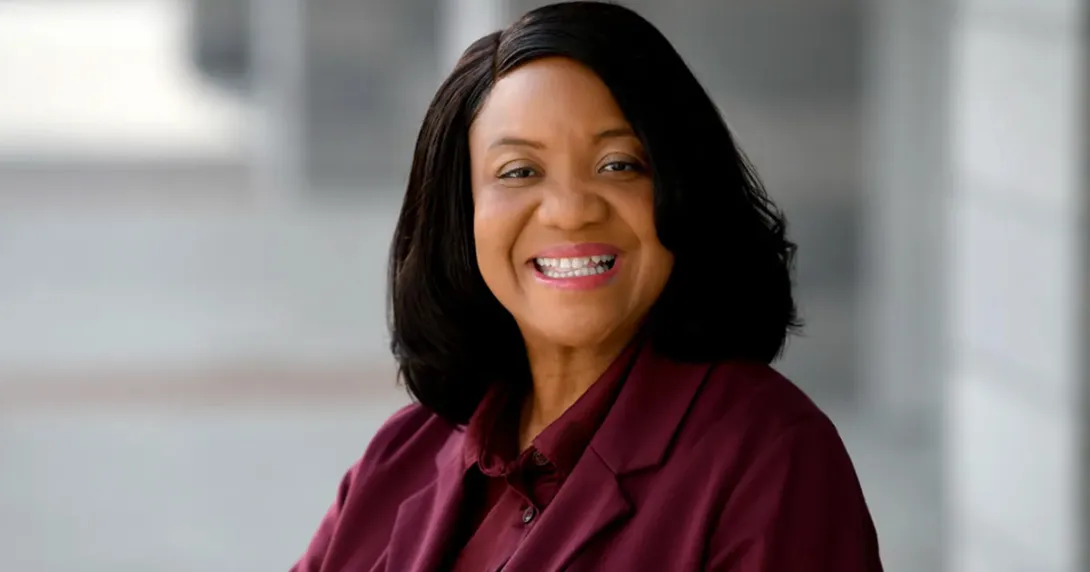
Audrey Gregory, CEO of AdventHealth’s new Multi-Division Delivery Network
Photo: AdventHealth
This past year, Florida-based AdventHealth launched its new Multi-Division Delivery Network, an integration initiative designed to more closely link primary care, home health and hospital services across its locations in nine states.
Concurrently, the health system is in the midst of Vision 2030, a decade-long innovation effort it launched in 2020 to prioritize whole-person care, patient experience, financial growth and sustainability.
To achieve those goals, any large and complex organization needs all of its employees – from front-line caregivers to back-office staff to C-suite brass – to be rowing in the same direction. And that requires forward-thinking leadership strategies.
Next month at the 2026 HIMSS Global Health Conference & Exhibition in Las Vegas, Audrey Gregory, PhD, RN, chief executive officer of AdventHealth's newly created delivery network, will offer some insights into health system leadership.
Her session, "From Intention to Results: Optimizing Leadership Development to Transform Workforce," is designed for senior executives who are setting direction, shaping culture and developing leaders in the midst of constant change.
"What I hope people take away is a practical and applicable approach toward leadership development – not as simply a program you attend, but as a capability you build over time," said Gregory. "When leadership development is connected to an organization’s mission and strategy, it shows up in real ways: in decisions, in how leaders support their teams and in how they navigate change, including technology-driven change."
Her discussion will share some lessons that she and her leadership team colleagues have learned through their innovation efforts at AdventHealth in recent years, and how they aim to keep leadership development connected to the realities leaders are facing every day.
As explained in the HIMSS26 session description, healthcare leaders today are operating in a "complex environment marked by ongoing workforce challenges, rising consumer expectations and rapid digital transformation." In such a climate, "leadership development is no longer optional – it is essential to building the competencies, culture and resilience needed for healthcare organizations to thrive."
That's why AdventHealth made leadership development a strategic priority for its Vision 2030 roadmap – specifically through its award-winning Leadership Institute workforce development program, guided by the health system's "Lead Self, Lead Others, Lead Results" framework.
It's meant to be a scalable model designed to support leaders – from frontline and clinical managers to senior executives to staff at every level – and help align leadership practices with both organizational goals and workforce needs.
"Vision 2030 is designed to help us move forward together without losing sight of who we are," said Gregory. "As our organization has grown across markets and care settings, leadership has become essential to ensuring our mission and commitment to whole-person care show up consistently.
"What really powers Vision 2030 forward is our culture of missional leadership. It gives leaders a shared understanding of what matters most and helps translate strategy into everyday decisions. Our cultural framework and management systems are there to provide clarity and alignment. They help leaders stay focused, grounded and accountable to one another, especially during periods of growth and change."
AdventHealth's Lead Self, Lead Others, Lead Results rubric, meanwhile, was designed as a framework that could align leaders across a growing organization with more complex and intertwined care settings, spread out across nine states.
"That work began with executive leaders coming together to define a common set of leadership aspirations," said Gregory. "We introduced it in 2019 as a way to clearly articulate what it means to lead at AdventHealth and to continuously ensure mission centrality as we continue to grow. It provides a shared language and clear expectations, while still allowing leaders to lead authentically at every stage of their journey."
As she explains it, "Scale brings opportunity, but it can also bring complexity. One of the biggest challenges is maintaining a shared culture while honoring local leadership and the unique needs of the communities we are a part of."
Technology can help, said Gregory. But only when it’s used with intention.
"It allows us to onboard leaders more consistently, reinforce shared expectations and reduce administrative burden so leaders can focus more on their teams and the people they serve. Through technology-enabled learning at the Leadership Institute, leaders across the system have access to the same frameworks, language and development experiences, helping create alignment across a large and diverse organization."
Even with the right tools in place, however, a key challenge is making sure health system leaders are keeping pace with rapid change.
"Healthcare is constantly evolving," said Gregory. "What leaders need most is a steady anchor. For us, that anchor is our mission and vision. They’re clear enough to align leaders around shared priorities, but flexible enough to allow for change in how those priorities are achieved.
"As the environment changes, we reinforce that anchor through ongoing learning and dialogue – from leadership retreats and book clubs to regular C-suite meetings – creating space for leaders to step back, reflect and learn together. That shared learning helps leaders stay grounded in purpose and focused on the people they serve, allowing them to respond to change thoughtfully, rather than react under pressure."
Another key priority is to support women and diverse leaders in particular – which of course comes with its own set of challenges.
"Supporting women and diverse leaders requires intention and consistency," said Gregory. "We focus on creating clear development pathways, diverse leadership forums and environments where leaders feel supported and prepared to grow. Inclusion is a shared responsibility across the organization. When leaders feel seen, valued and equipped, it strengthens collaboration, improves decision-making and helps build cultures where people can do their best work."
At HIMSS26, Gregory hopes attendees can take some valuable lessons from her experience back to their own organizations.
"At its core, this session is about people," she said. "When we invest in leaders in meaningful, intentional ways, we’re better able to support our teams and stay focused on the people and communities we serve.
"My hope is that people leave this session feeling grounded and encouraged," she added, "with a clearer understanding that leadership development isn’t extra work. It’s essential work, and it’s one of the most important ways we sustain our mission over time."
Gregory's session, "From Intention to Results: Optimizing Leadership Development to Transform Workforce," is scheduled for Tuesday, March 10, from 10:15-11:15 a.m. in Level 5/Palazzo K at the Venetian at HIMSS26.
Mike Miliard is executive editor of Healthcare IT News
Email the writer: mmiliard@himss.org
Healthcare IT News is a HIMSS publication.


