Photo: REB Images/Getty Images
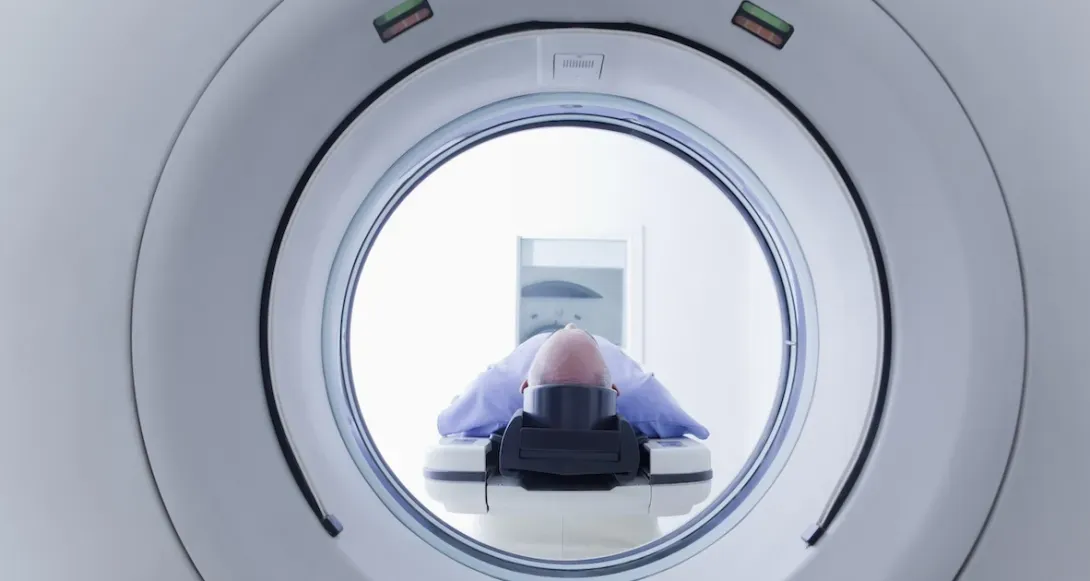
Through GE Healthcare's AI Innovation Lab, Mass General Brigham and UW-Madison will pair the company's magnetic resonance imaging foundational model with real data from their hospital systems and then use machine learning to test the technology.
The GE lab has also announced new agentic AI projects aimed at clinical workflows and patient care delivery.
WHY IT MATTERS
GE called model fine-tuning in provider environments a critical step for assessing the adaptability of this model for a range of operational and clinical use cases.
"We are not just developing AI to address today’s most complex healthcare challenges – we are also investing in new research to anticipate tomorrow’s needs," Dr. Taha Kass-Hout, GE HealthCare’s global chief science and technology officer, said in a statement on Monday.
MGB AI will use the model to analyze prostate use cases – including disease classification, lesion segmentation and measurement – GE said. Researchers will use standardized PI-RADS scores to interpret prostate MRI scans to assess clinical significance, adapting the model for these use cases.
The University of Wisconsin–Madison will evaluate the MRI model across numerous factors, including body region detection, image quality control and contrast agent recognition, and then benchmark task performance against other foundation models.
The AI Innovation Lab is also looking to pioneer agentic AI for radiology with what could be the first diagnostic imaging assistant to help address the radiologist shortage, evaluate an AI agent that reviews incidental findings in abdominal CT scans for clinical decision-making and develop energy-efficient neural networks for tomographic imaging, such as positron emission tomography, or PET scans, GE said.
THE LARGER TREND
GE Healthcare has previously incorporated AI into its digital imaging technologies for healthcare. Two years ago, the U.S. Food and Drug Administration approved the company's neural network – Sonic DL – for use in accelerating cardiac MRI image acquisition.
Then, GE announced in December that it had developed a new full-body 3D MRI foundational model, originally trained on a dataset of more than 200,000 MRI images from approximately 20,000 MRI studies, featuring enhanced performance when compared to other publicly available research foundation models.
Preliminary testing last year at MGB demonstrated performance in classifying prostate cancer and Alzheimer’s disease images, the company had said.
"While general AI is getting closer to performance levels that may soon be acceptable for broad applications in medicine, in the intervening period, our research shows that foundation models fine-tuned for specific medical applications can help accelerate performance gains needed to build confidence in the technology and demonstrate near-term ROI," said Dr. Keith Dreyer, MGB chief data science officer and AI business lead, in the company's announcement.
ON THE RECORD
"Our AI Innovation Lab projects offer a behind-the-scenes look at areas that we believe hold real potential to transform care for both patients and clinicians," Kass-Hout said in a statement. "With hospital systems currently harnessing only about 3% of their available data, the opportunity to unlock transformative insights with AI is immense."
Andrea Fox is senior editor of Healthcare IT News.
Email: afox@himss.org
Healthcare IT News is a HIMSS Media publication.