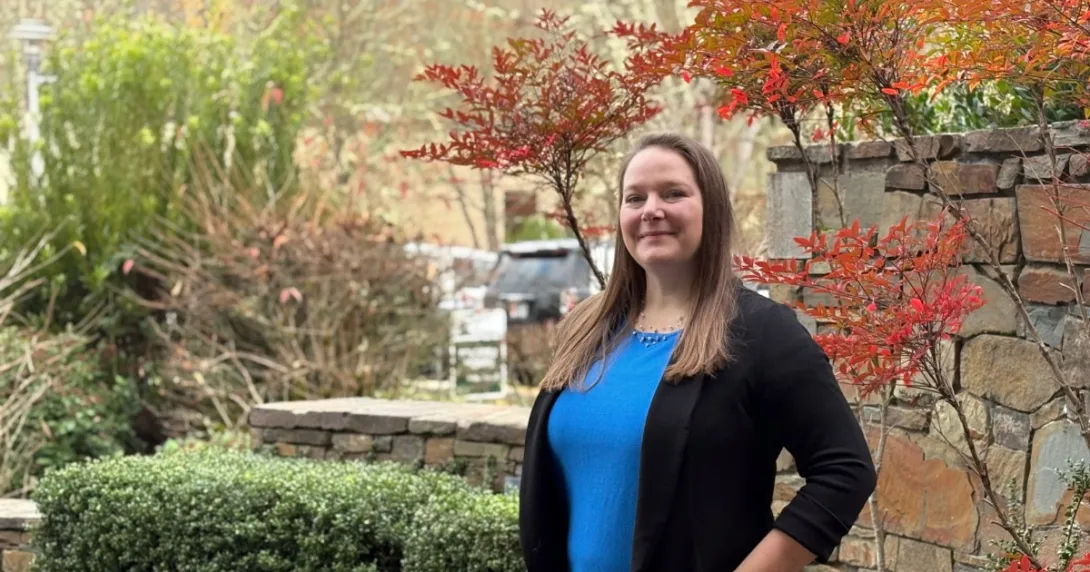
Beth Bunt, manager of Evergreen Family Medicine, which serves southern Oregon
Photo: Beth Bunt
During the last five years, Evergreen Family Medicine grew from two locations and 11 providers to four locations, six specialties and more than 50 providers. It now serves more than 50,000 active patients across rural Douglas County in southern Oregon.
THE CHALLENGE
While this growth reflects the needs of the community, it created intense pressure on the practice's phone system.
Call volume began to outpace staffing capacity. Hold times often exceeded 20 minutes and calls regularly rolled over because receptionists were already helping people in person. Staff rebuilt the phone tree several times and encouraged portal use, but none of it made a meaningful difference.
After hours, the strain was even more obvious. The third-party answering service introduced more problems than it solved. Messages often arrived with little to no context, leaving providers to track down basic information on their own before they could begin helping the patient. The practice was falling short of its expectations for access and patient-centered care.
All of that activity then had to be manually documented the next day, adding even more work to already full schedules. To make matters worse, the practice was being billed for every single call that came through – whether it was complete, incomplete or required providers to redo the work. The costs added up quickly and did not translate into better service for patients.
"During the day, many calls involved clinical questions or requests that passed through several staff members before being resolved," said Beth Bunt, manager of Evergreen Family Medicine. "Patients sometimes called two or three times in the same day just to confirm their message had been received.
"All of this added up to a phone system that could no longer keep pace with the size of our organization or the needs of our patient community," she added. "Staff were stretched thin, providers were dealing with incomplete information, costs were rising without adding value and patients were waiting too long for help."
PROPOSAL
Overall, Evergreen Family Medicine's work is guided by what it has named its "SPIRIT Values," which stands for Stewardship, Patient-centered care, Integrity, Respect, Innovation and Teamwork.
"Innovation is not just something we talk about," Bunt noted. "We believe it is our responsibility to look for ways to provide better care with fewer barriers – and with less wasted effort.
"It had become clear our existing approach to call management was not sustainable," she continued. "We needed a system that already worked, one that could reduce workload and cost, meet our operational needs, and improve patient access. That is what led us to Phreesia VoiceAI."
The practice has had an eight-year working relationship with Phreesia, which meant it already understood the vendor's implementation and support model. That familiarity made the search process easier and reduced uncertainty, she added.
When staff evaluated artificial intelligence technologies, they identified three requirements on which they were not willing to compromise:
- No summarizing of patient messages. They needed the patient's exact words.
- Full EHR integration; otherwise, too many staff members would still be involved in each call.
- The ability to see every call, identify workflow issues and avoid being charged for "ghost calls" from the former answering service.
"We expected the system to lighten our workload and route calls more intelligently," Bunt explained. "At the same time, we prepared for complaints. Every technology change in the past brought at least some level of frustration from both patients and providers. We were prepared for complaints and resistance because that is how every technological change had gone in the past.
"Instead, we received no complaints at all," she revealed. "Our providers embraced the new after-hours workflow immediately. On the first day alone, the system handled nearly 1,000 calls, and not a single patient reported a negative experience. That had never happened here."
MEETING THE CHALLENGE
In the daytime workflow, every call begins in the Phreesia phone tree. It uses the athenahealth EHR integration to filter and route callers to the appropriate place. Clinical calls now go straight to a provider's medical staff.
All calls and messages appear on the dashboard, which has significantly expanded capacity. Instead of relying on only frontline receptionists, the practice now has up to 10 team members managing calls at the same time.
In the after-hours workflow, on-call providers now receive complete context for calls, including transcribed messages. This reduces unnecessary callbacks and interruptions. Documentation goes directly into the chart, so even if the on-call provider changes mid-shift, all information is available.
For refill requests and message handling workflow, Evergreen Family Medicine updated the refill workflow so patients can leave messages that go directly to their provider's staff. The front desk no longer handles these calls. Staff also use the patient chat feature for quick confirmations of appointment times or receipt of documents. This simple change eliminated a surprising amount of phone tag.
For reception and management use, reception teams monitor the dashboard in real time. They return calls, schedule appointments and work messages efficiently. Staff created dashboard views by provider pod, and the filtering features help them identify and resolve issues quickly.
Management uses the system to troubleshoot, track usage, analyze patterns and monitor staff productivity. The visibility into call flow is much clearer than before.
And, overall workflows changed very little. The biggest difference is how staff spend their time. Staff now spend most of their time returning messages and helping patients quickly instead of addressing long-hold queues. They now spend more time helping people rather than trying to calm callers who have been waiting on hold.
"With athenahealth integration, we choose which messages go into the EHR and which stay on the dashboard," Bunt noted. "Reception can turn a message into a chart entry with only a couple of clicks."
RESULTS
AI-based call management systems can deliver big results, as Evergreen Family Medicine found out.
Within the first two months of using VoiceAI, the system handled 100,000 calls. In November 2025 alone, staff with the help of the AI managed more than 6,000 messages. Nearly 2,000 of these messages went directly into the EHR and straight to clinical staff with no receptionist involvement.
The technology allowed the practice to reclaim 20,000 staff hours in just two months. These are hours that previously required involvement from multiple staff members for each call. The practice now uses that time for direct patient support.
Hold times were nearly eliminated. Messages are now returned within three to five minutes, which is faster than waiting on hold ever was.
The 2,000 directly-routed messages each month used to require involvement from three different staff members. Smart routing reduced reception workload by one quarter and allowed the team to focus on in-person patient needs and higher-value tasks.
Although cost savings were not the primary goal, the financial impact has been significant. The practice saved $650,000 in the first two months simply by reducing inefficiencies and eliminating dependence on costly third-party services, Bunt reported.
Further, providers now receive complete context for after-hours calls and can resolve concerns in a single interaction. Documentation flows into the chart immediately. This has improved provider efficiency and reduced the burden of after-hours work.
"And as I often say, in medicine the goal is to be the best for the most patients," Bunt said. "Implementing AI into our call-management workflow moved us closer to that goal by enabling us to help more people, more efficiently, without compromising quality."
Follow Bill's health IT coverage on LinkedIn: Bill Siwicki
Email him: bsiwicki@himss.org
Healthcare IT News is a HIMSS Media publication.
WATCH NOW: Managing government policy and regulation in healthcare AI adoption


