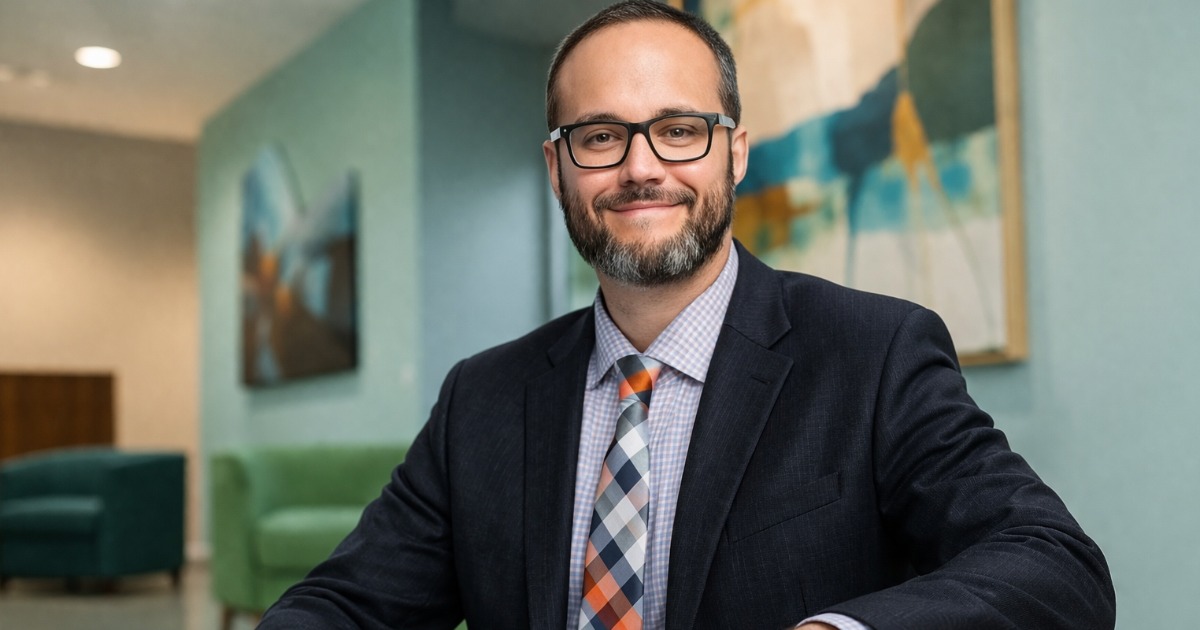
Dr. Hamad Husainy, chief medical officer at PointClickCare
Photo: PointClickCare
Hospitals' and health systems' need to learn to operationalize responsible, clinician-centered artificial intelligence at scale is a major point of discussion this week at the 2026 HIMSS Global Health Conference & Exposition in Las Vegas.
Healthcare already has moved well beyond pilot programs and proof-of-concept demonstrations. This acceleration means health system leaders attending HIMSS26 now are under pressure to embed AI directly into clinical and operational workflows in ways that are measurable, sustainable and trusted, said Dr. Hamad Husainy, chief medical officer at PointClickCare.
PointClickCare, in booth 4416 at HIMSS26, is a health tech company with a large long‐term and post‐acute care dataset with the aim of delivering intelligent transitions, insightful interventions and improved financial performance.
Factors holding organizations back
"The focus is shifting from experimentation to execution, particularly in generative AI, agentic AI and predictive models that influence real-time decision-making," Husainy explained. "Across the market, AI adoption has accelerated rapidly, yet many organizations continue to be held back by data and systems fragmentation, unclear ROI and integration into workforce culture.
"At the same time, macro forces such as interoperability gains through FHIR and TEFCA, evolving regulatory expectations and capital discipline are raising the bar," he continued. "Boards and executive teams are asking whether AI initiatives will demonstrate value within 12 months and whether they align with broader value-based care strategies."
From a clinical perspective, the most important development within AI is the use of real-time, context-aware intelligence to close information gaps across care transitions, he added.
"In emergency departments where I practice, for example, AI-driven summarization and risk stratification can extract meaningful insights from post-acute documentation in seconds, allowing frontline teams to make faster, safer decisions," he noted.
"This type of targeted augmentation supports clinicians rather than overwhelming them, and it directly addresses throughput, avoidable admissions and readmissions," he continued. "As the industry faces mounting financial and workforce pressures, AI that bridges acute and post-acute settings and produces measurable impact will dominate the conversation."
Clear governance
CIOs and health IT leaders should begin by establishing a clear governance framework for responsible AI that aligns clinical leadership, compliance, data science and operations, Husainy said.
"Privacy, security, fairness and traceability must be foundational requirements – especially as generative and agentic models become embedded in workflows," he advised. "AI outputs should be explainable and auditable so clinicians can validate recommendations and maintain oversight.
"Second, leaders should prioritize use cases that directly impact operational bottlenecks and value-based care performance," he continued. "For example, emergency department throughput, post-acute transitions, readmission reduction and high-risk patient identification are areas where automated real-time intelligence can produce significant near-term ROI."
Rather than launching isolated pilots, however, organizations should focus on integrated deployments that unify data across settings and generate actionable insights at the point of care, he added.
"This approach increases the likelihood of measurable outcomes by reducing fragmentation and improving the clinician's experience," he said. "Likewise, CIOs should invest in change management and clinician engagement. AI must enhance the human touch in care delivery rather than create an additional burden.
"In my experience as an emergency physician, adoption accelerates when frontline teams see that technology closes information gaps, reduces duplicative work, offers instant access to actionable data and increases confidence in decision-making," he concluded. "Leaders who align AI strategy with clinical priorities, provide education and measure impact transparently will be best positioned to scale responsibly and sustainably."
Follow Bill's health IT coverage on LinkedIn: Bill Siwicki
Email him: bsiwicki@himss.org
Healthcare IT News is a HIMSS Media publication.
WATCH NOW: Chief AI Officers require a deep understanding of the technologies and clinical ops