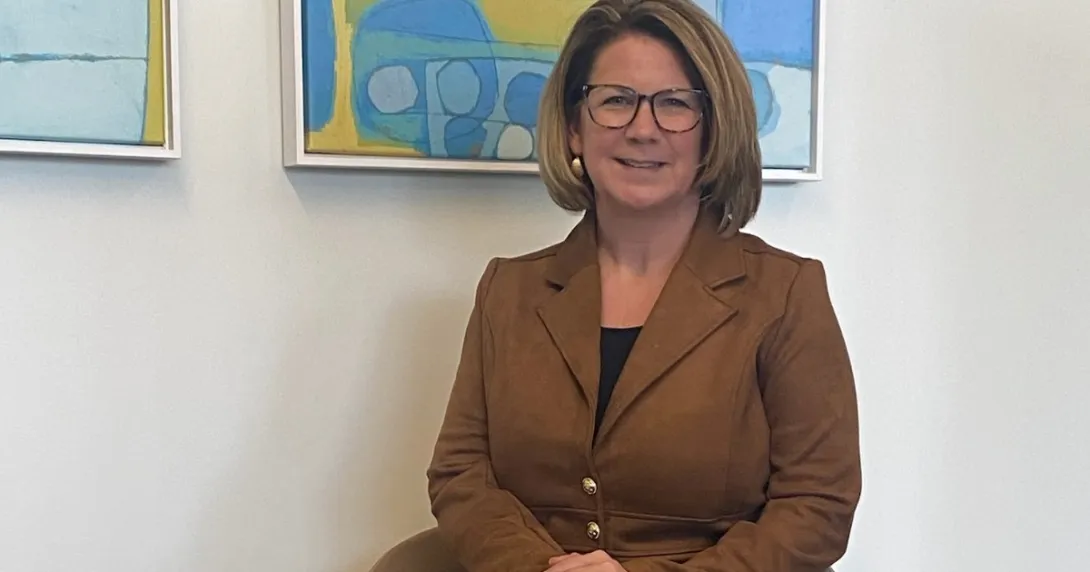
Dr. Erica Stevens, vice president, department chief, primary health at Corewell Health
Photo: Corewell Health
Corewell Health is a not-for-profit health system serving communities across Michigan. It has more than 60,000 team members – including 11,500 physicians and advanced practice providers and 16,000 nurses – delivering care across 21 hospitals, 300 outpatient locations and multiple post-acute facilities.
THE CHALLENGE
Before implementing remote patient monitoring technology, Corewell's primary care teams were struggling with a chronic disease burden that was growing more complex each year. Its chronic disease management model was limited by the episodic nature of traditional primary care.
"Patients with hypertension, diabetes and heart failure were often seen only a few times per year, leaving long periods where their conditions could worsen without detection," recalled Dr. Erica Stevens, vice president, department chief, primary health at Corewell Health.
"As a result, patients frequently arrived at appointments with significantly deteriorated clinical status, simply because we lacked real‑time insight into what was happening between visits.
"Another challenge was the variability and inaccuracy of patient-reported data," she added. "Many of our patients either did not track their vitals consistently or relied on equipment that produced readings we could not validate."
This made it difficult to distinguish true clinical deterioration from measurement error. Treatment decisions were often reactive, based on incomplete information. Providers felt they were constantly trying to correct issues that could have been prevented with earlier visibility into patient trends.
"Operationally, this created strain for both patients and providers," she noted. "Patients with chronic conditions frequently required follow-up calls, manual reminders or urgent clinic visits that taxed already limited resources. Meanwhile, care teams lacked efficient mechanisms to identify which patients needed timely intervention and which were stable.
"Without the ability to monitor trends over time, our clinicians could not reliably prioritize outreach or escalate care early," she added. "The cumulative effect was a cycle of delayed interventions, avoidable exacerbations, and a sense that our traditional care model was no longer keeping pace with the needs of a growing chronic disease population."
PROPOSAL
RPM vendor Cadence proposed a connected care model that would fundamentally shift Corewell's approach from episodic, appointment-based care to continuous, real-time management of chronic conditions.
Instead of relying on patients to self-monitor inconsistently or wait for their next clinic visit, the technology offered a structured way to capture daily biometric data, such as blood pressure readings, glucose results and weight – all using FDA-approved devices connected to a centralized clinical platform.
"The promise was this continuous stream of objective, reliable data would replace the unreliable, intermittent information we had been forced to make decisions from," Stevens explained. "Cadence positioned itself as a vendor that could extend our clinical reach into patients' homes, filling the gaps between visits where deterioration often occurred.
"Equally important was the proposal to pair technology with clinical support," she said. "The vendor brought dedicated clinical support through nurse practitioners and care team members who would monitor alerts, review charts and initiate medication titration within agreed‑upon protocols. This ensured patients would receive timely clinical responses at any time, reducing the burden on our internal teams."
Finally, the vendor proposed integrating its platform and workflows into Corewell's existing systems so care could be documented and coordinated seamlessly. By surfacing real-time readings, medication changes and clinical notes directly into the electronic health record, the technology was designed to reduce fragmentation and improve continuity.
"They also aimed to ease operational strain by providing 24/7 patient support and handling the bulk of routine monitoring, which previously fell on overextended clinical teams," she said.
"Ultimately, the proposal was to create a closed-loop system where patient data, clinician oversight and timely interventions worked together to prevent deterioration, improve outcomes and bring much-needed stability to chronic disease management."
MEETING THE CHALLENGE
To operationalize remote patient monitoring, Corewell embedded the Cadence program into its primary care workflows and identified patients with hypertension, diabetes or heart failure who would benefit. The physician or advanced practice provider placed a referral.
"Outreach to the patient is initiated by the vendor team," Stevens explained. "Corewell patients had a greater than 80% patient engagement, showing patients are looking for ways to better their health. Once enrolled, patients used cellular connected devices, provided by Cadence, that automatically transmitted daily vitals to the vendor platform from the patient's home.
"Creating a continuous flow of reliable data without changing a patient's daily routine or traveling to a physician's office – this gave us a clearer, more consistent picture of their chronic disease status every single day," she continued.
The technology is actively used by both the vendor's clinical team and Corewell physicians and advanced practitioners. The vendor's nurse practitioners review incoming alerts, conduct chart reviews and initiate timely medication titration based on standing clinical protocols. Their team also maintains direct communication with patients – answering questions, offering coaching and escalating concern when needed.
"On our side, providers reviewed any medication or care plan changes within our existing workflows, cosigned orders when appropriate and were notified only when escalation was clinically necessary," she noted.
"This division of labor allowed our physicians and advanced practice providers to remain clinically involved, but without the burden of daily data review or 24/7 monitoring. It ensured patients received high-touch, responsive care while reducing operational strain on already busy providers.
"The program is integrated, seamlessly," she continued. "Cadence's platform feeds relevant updates, alerts and medication changes into our existing electronic health record environment, ensuring continuity and eliminating documentation silos."
The combination of real-time biometric monitoring, clinical oversight and EHR integration created a closed-loop model that allows us to intervene earlier, personalize care plans and stabilize chronic disease progression in a way that wasn't possible under traditional visit-based care, she added.
RESULTS
One of the most significant outcomes Corewell has achieved to date with the RPM program has been measurable improvement in hypertension control across the enrolled population. Corewell patients in the hypertension cohort (n=1.949) experienced a meaningful clinical improvement, with reduction in average blood pressure and better alignment with guideline-recommended targets.
Hypertension goal of <130/80 went from 26.70% to 39.5% in 4 months, a positive change of 12.8%. Hypertension goal of <140/90 went from 57.6% to 74.6% in 4 months, a positive change of 17%. With continuous RPM, instead of waiting months between readings, staff were able to identify concerning trends within days and intervene before those trends became emergencies, Stevens reported.
For patients with Type 2 diabetes, Cadence RPM provided reliable, real-time visibility into daily glucose patterns, she said. Corewell patients in the diabetes cohort (n=65) showed a 6.24% improvement in obtaining glucose levels <154 over 4 months, and 12.55% improvement in obtaining glucose levels <183 in 4 months.
"These improvements reflect the benefit of early interventions, whether through medication adjustments or behavioral coaching, enabled by continuous data flows," she explained. "Patients frequently expressed that having someone monitor them daily made them feel more accountable and supported, driving higher engagement and more effective disease control."
Among heart failure populations (HFrEF cohort, n=79), remote patient monitoring supported more stable fluid management and reduced acute escalation needs. There was a 6.24%-12.55% improvement across key clinical indicators tied to heart failure, from daily weights and symptoms where the team could detect early signs of fluid retention and intervene before patients required emergency care, to helping patients achieve all four pillars of Guideline Directed Medical Therapy, she reported.
"This rapid response capability was essential in preventing avoidable hospital visits and maintaining more consistent clinical stability," said Stevens.
Follow Bill's health IT coverage on LinkedIn: Bill Siwicki
Email him: bsiwicki@himss.org
Healthcare IT News is a HIMSS Media publication.
WATCH NOW: Price transparency is vital for lowering healthcare costs


