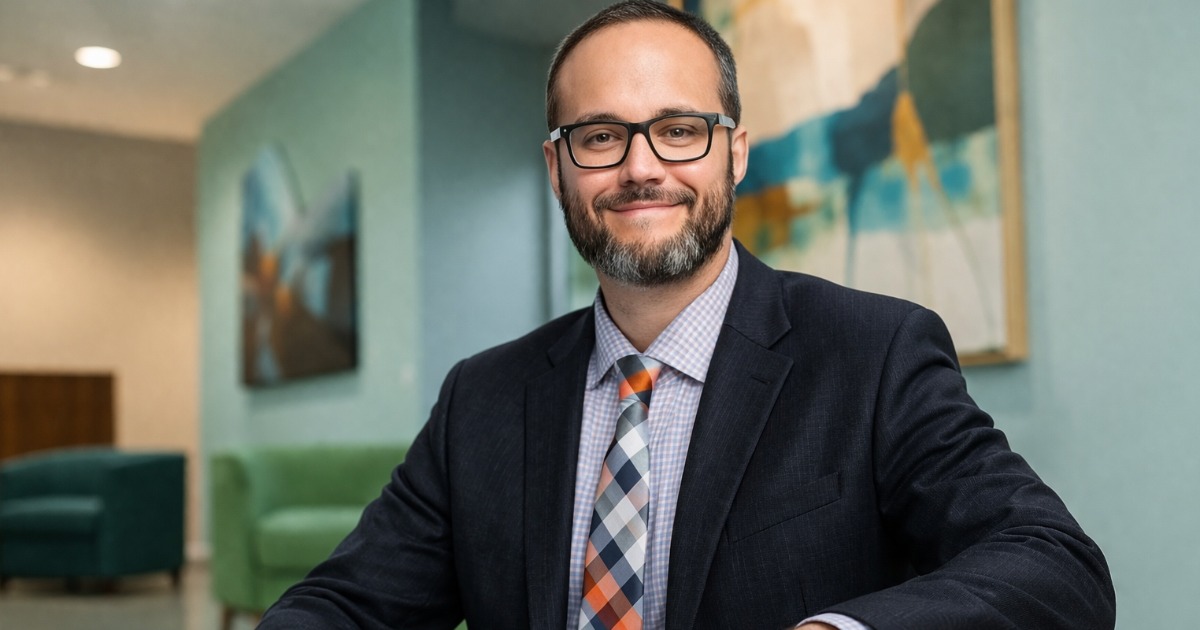
Nick Fuchs, CIO, Springfield Clinic
Photo: Springfield Clinic
Springfield Clinic is a multi-specialty medical group serving central Illinois since 1939. With 650 providers across 90 locations, the organization requires a contact center that operates in optimal fashion and serves patients a quality experience.
Healthcare contact centers face several unique challenges, said Springfield Clinic Chief Information Officer Nick Fuchs.
"First, as organizations like ours grow and add new practices, we inherit a patchwork of legacy phone systems and technologies," he explained. "This challenge of unifying both the staff and patient experiences across multiple platforms is near impossible and introduces many inefficiencies. In our case, staff at one location couldn't easily cover for another, which complicated scheduling and made it difficult to respond effectively to outages or spikes in call volume.
"From the patient perspective, this can result in long hold times and inconsistent service, which is especially problematic in healthcare, where timely access and clear communication are critical," he added. "On the employee side, managing high call volumes with outdated systems can lead to burnout and high turnover, which further impacts patient experience."
Into the cloud
Springfield Clinic consolidated its various systems onto a cloud-based contact center platform.
"For us, Cisco's Webex Contact Center provided a modern, scalable system that allowed our patient access staff to support multiple locations, regardless of where they're physically located," he said. "Now, if one office has a surge in call volume, calls can automatically transfer to agents elsewhere, reducing wait times and ensuring patients reach someone who can help.
"Because the platform is cloud-based, it also strengthens our business continuity posture," he added. "If a storm or network issue impacts one location, calls automatically route elsewhere without disruption."
The organization also benefits from centralized reporting and analytics, making it easier to monitor performance and make data-driven staffing decisions, he noted.
"Additionally, we're piloting AI-powered tools like call transcription and scheduling to further streamline workflows and support our staff in being more present and empathetic during patient interactions," he said.
Big results, and fast
Springfield Clinic's move to a unified contact center platform yielded results almost immediately.
"Our call abandonment rate dropped by 44% and average wait times decreased by 71%," Fuchs reported. "Centralized reporting also has allowed us to identify and address bottlenecks much more quickly and eliminated the need to manually piece together information from multiple systems. This not only improved operational efficiency but also helped us better manage staffing and resources.
"Beyond patient-facing improvements, we've cut legacy telephony maintenance costs by more than $1.6 million annually, creating sustainable savings over time," he added. "The reduced burden on IT and contact center staff – combined with improved patient satisfaction – translates into a strong return on investment."
These tools have made a significant difference for both patients and staff at Springfield Clinic.
Building trust and satisfaction
"Patients now experience much shorter wait times and are more likely to reach someone who can help them on the first call, which is crucial for building trust and satisfaction," Fuchs said. "For our employees, the ability to support each other across locations – without needing to be physically present – has reduced burnout and improved morale.
"The introduction of AI-powered call transcription is especially promising, as it allows staff to focus on empathetic communication rather than note-taking, with summaries easily added to the electronic health record," he concluded. "Overall, the transition to a modern, cloud-based platform has made the contact center less of a burden and more of an asset for our organization."
Follow Bill's health IT coverage on LinkedIn: Bill Siwicki
Email him: bsiwicki@himss.org
Healthcare IT News is a HIMSS Media publication.
WATCH NOW: Should providers aim for moonshots or quick wins with AI?