Photo: Senate Finance Committee
Updated October 14, 2025: A previous version of this story incorrectly noted the date of the Coalition for Health AI's letter to its members as Oct. 10, and that has been updated to Oct. 2.
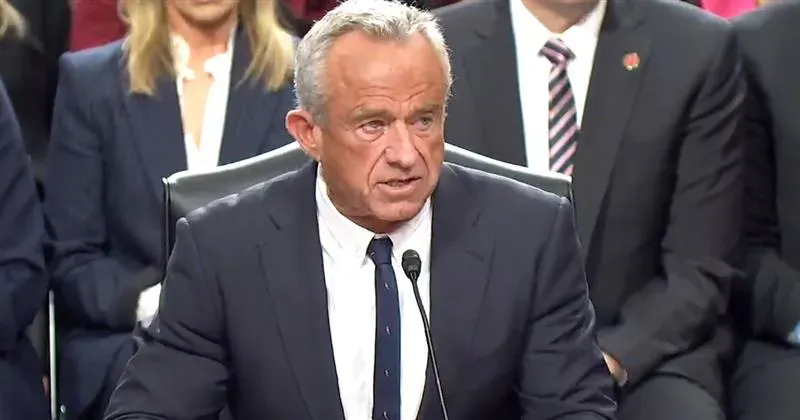
In a new controversy over healthcare artificial intelligence, officials from the U.S. Department of Health and Human Services – including HHS Secretary Robert F. Kennedy Jr. and Deputy Secretary Jim O'Neill – have publicly criticized the Coalition for Health AI for its efforts to create industry safety and transparency standards.
"We must not let the Coalition for Health AI (CHAI) build a regulatory cartel," said Kennedy in an Oct. 8 post on the social media platform X, while praising an op-ed piece in The Washington Examiner by O'Neill and Food and Drug Administration Commissioner Dr. Marty Makary that sharply criticized CHAI's efforts.
Finding common ground
Kennedy and others in the Trump Administration have accused CHAI of stifling innovation by engineering regulatory burdens. Their criticisms follow previous scrutiny from lawmakers who have expressed concerns about CHAI's activities in the healthcare AI space.
CHAI CEO Brian Anderson defended the organization in a letter to its members, highlighting its open process and a strategy that aligns with current federal AI initiatives.
Despite ongoing criticism, CHAI has continued its work, recently releasing a framework for the responsible use of AI in healthcare and partnering with organizations, including the National Association of Community Health Centers, to promote safe and ethical AI adoption.
Trump Administration officials have criticized CHAI by casting it as an organization, founded during the Biden Administration in partnership with Big Tech, with an aim to squash health tech startups. They likened its activities to regulatory capture.
"Imagine what would happen if the government put Boeing in charge of airline safety, or if fast-food chains set national nutrition standards," O'Neill and Makary wrote.
In his Oct. 2 letter to CHAI members, Anderson said he intended to contact O'Neill to discuss the conflict of interest issues he alleges.
"We are eager to learn more about the concerns from HHS and how CHAI can better represent our membership and their priorities to this group of stakeholders," he said. "We remain a nonpartisan space where policy leaders and regulators can easily engage with private sector clinicians and technologists – learning about real-world use cases, emerging technologies and best practices."
"I am approaching these conversations with genuine curiosity and humble inquiry towards what CHAI can do better to create space for our public-sector colleagues to participate in our important, private-sector-led efforts," Anderson added.
CHAI has no official regulatory role, but rather seeks to scale AI adoption to ensure better outcomes – and Anderson said the organization's strategy is largely aligned with the Trump AI Action Plan and executive order on "Removing Barriers to American Leadership in AI."
Anderson characterized CHAI's processes as open and collaborative, and said that although its 3,000 organizational members "rarely all agree," they're able to "find common ground." He added: "We consciously make room for disagreement, for different perspectives, and for hard conversations."
We have reached out to members of the CHAI board and will update this story if they have statements to add.
Some U.S. lawmakers criticized CHAI when it released its draft AI framework for public comment in June 2024, expressing concern that healthcare industry giants in leadership roles at the organization would try to impede competition from startups through excessive regulatory proposals.
They had aired similar concerns about regulatory capture when they questioned FDA leaders about their partnership with CHAI at a hearing in May 2024.
One member of the U.S. House of Representatives, Dr. Mariannette Jane Miller-Meeks, R-Iowa, asked whether the FDA intended to outsource AI certification to CHAI, which she criticized for lack of diversity in its corporate membership and for "clear signs of attempt at regulatory capture."
'Real-world best practices'
Earlier this year, CHAI and the Joint Commission published guidance on the Responsible Use of AI in Healthcare, a framework to aid healthcare organizations in their efforts to safely integrate AI tools, which have the potential to enhance diagnostics and personalize treatments but also present several risks, including misdiagnoses or inappropriate treatments.
The framework prioritizes patient safety and trust, data privacy and transparency, while guiding health systems in establishing formal AI policies and governance structures for accountability. It also calls for the implementation of robust data security and access controls, performing thorough risk and bias assessments to ensure equitable performance across diverse populations, and conducting ongoing quality monitoring.
CHAI and the Joint Commission also advocate for comprehensive provider education and training and encourage voluntary, blinded reporting of AI safety-related events to foster continuous learning.
In August, CHAI and the National Association of Community Health Centers announced a new collaboration to empower safe and responsible AI adoption at more than 17,000 CHC sites in the United States. The plan, according to a statement from the organizations, is to explore the use of AI tools to streamline Medicaid eligibility and enrollment changes passed under the One Big Beautiful Bill Act.
"Our collaboration with CHAI aims to leverage responsible AI playbooks that are transparent, ethical and positively impact the populations they're meant to serve," Dr. Kyu Rhee, NACHC president and CEO, said in the statement.
"CHAI's mission has always been to share real-world best practices and the expertise of our robust community – spanning health systems, payers, startups, technology companies and patient advocates," said Anderson this past week in his letter to members.
Andrea Fox is senior editor of Healthcare IT News.
Email: afox@himss.org
Healthcare IT News is a HIMSS Media publication.