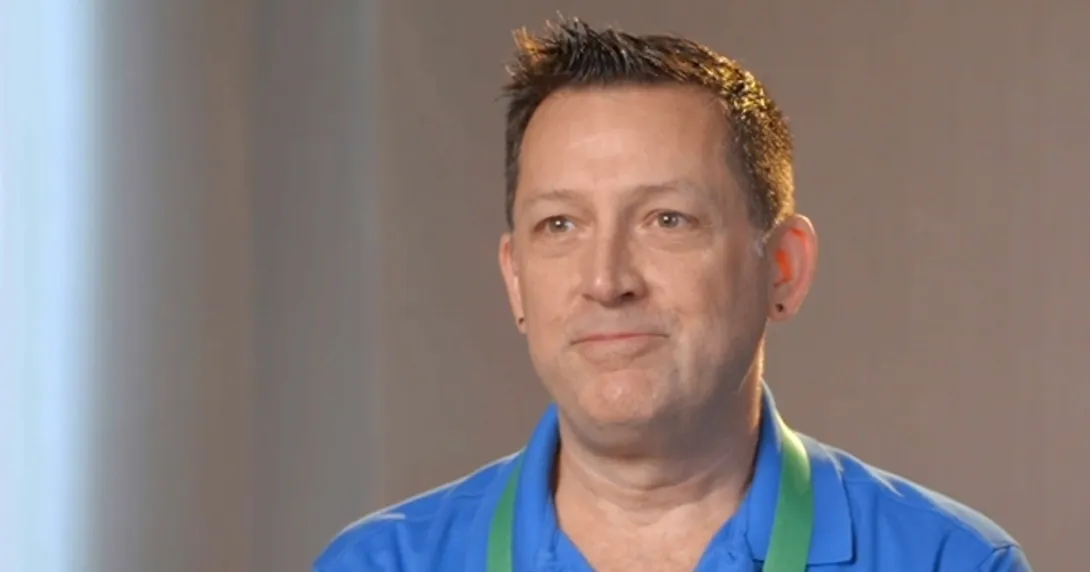
Dr. Steven Schiebel, a pediatrician at Allegro Pediatrics
Photo: Allegro Pediatrics
Before moving to ambient documentation, a lot of the cognitive load at Allegro Pediatrics during visits was tied to building a patient note in real time.
THE CHALLENGE
A physician is listening to the patient, thinking clinically, and at the same time, trying to make sure the documentation supports what he did and meets coding requirements. That split attention can pull the physician away from the patient, and over time, the computer can start to feel like more of a barrier in the room than a support, said Dr. Steven Schiebel, a pediatrician at Allegro Pediatrics, a physician-owned group practice that comprises 100 providers across nine locations outside Seattle.
"Because of that, notes sometimes ended up abbreviated, especially when multiple issues were discussed," he explained. "Secondary concerns might not be fully captured in the moment and would either need to be added later or weren't documented as thoroughly as they should have been. That led to addendums and the familiar experience of closing a chart only to realize there was one more thing that needed to be added.
"It also meant more after-hours work – the kind of pajama time that contributes to burnout," he continued. "We've seen how closely documentation workflow is tied to provider experience. So, finding a way to reduce that documentation burden without sacrificing the quality and completeness of the note has been an important focus for us."
PROPOSAL
The practice uses Greenway Health's AI-powered platform for their EHR needs. The idea behind Greenway's AI ambient voice scribing was to more completely capture the actual conversation during the visit so the documentation better reflects what really happened in the room, Schiebel noted.
"Rather than constructing the note while talking with the patient, the system listens and generates a draft based on the encounter itself," he said. "The practitioner still reviews and finalizes the note, but the initial capture happens ambiently. The expectation was that this would reduce cognitive load during visits, allowing providers to focus more fully on the patient instead of dividing attention between the conversation and the computer.
"If the system could capture more of the secondary issues and nuances discussed, the note would be more complete from the start," he added. "We also anticipated that stronger documentation up front would help in other areas – more clearly supporting the level of code billed and potentially reducing some of the back-and-forth that can happen later if families call with follow-up questions and something isn't clearly documented."
MEETING THE CHALLENGE
Allegro Pediatrics implemented the AI ambient voice scribing during regular patient visits. Practitioners use it in real time so the conversation is captured and turned into a draft note within the Greenway system. The provider reviews the draft, makes any needed edits and then, signs off – so, there's still full responsibility for what ultimately goes into the chart.
"A handful of practitioners transitioned from virtual human scribes to the AI ambient voice system," Schiebel recalled. "That gave us a direct comparison in terms of both workflow and cost. For those providers, it wasn't a dramatic change in how they practiced – they were already used to having documentation support – but it shifted how that support was delivered.
"Over time, additional practitioners have adopted it as they've seen how it captures more of the visit without adding extra steps," he continued. "Because it works within our existing EHR system, the documentation flows directly into the patient chart and supports our billing process. It's simply part of how we document visits now."
And on the occasions when it hasn't been available, people immediately notice – which speaks to how integrated it's become in day-to-day workflow, he added.
RESULTS
One clear, measurable result the practice has achieved has been direct cost savings.
"Several practitioners have transitioned from virtual human scribes to the AI ambient voice scribing, which represents approximately $2,000 per month per practitioner in savings," Schiebel reported. "That's a significant cost difference, compared to traditional scribe models. We currently have about 20 additional practitioners who could realistically move in this direction over time, so the financial impact has the potential to grow as adoption expands.
"Another important result has been stronger documentation supporting the level of service billed," he continued. "When I review notes generated through ambient voice documentation, versus what a practitioner might have manually entered, it's much more likely that the ambient note clearly supports the level of code."
In situations where the business office has been contacted about charges, reviewing those ambient-generated notes makes it easier to back up the billing office because the documentation more completely reflects what was addressed during the visit.
"We've also seen fewer addendums and less after-the-fact clarification, which reinforces that the notes are more complete from the start," he concluded.
Follow Bill's health IT coverage on LinkedIn: Bill Siwicki
Email him: bsiwicki@himss.org
Healthcare IT News is a HIMSS Media publication.
WATCH NOW: The model context protocol at work in AI and clinical workflows


