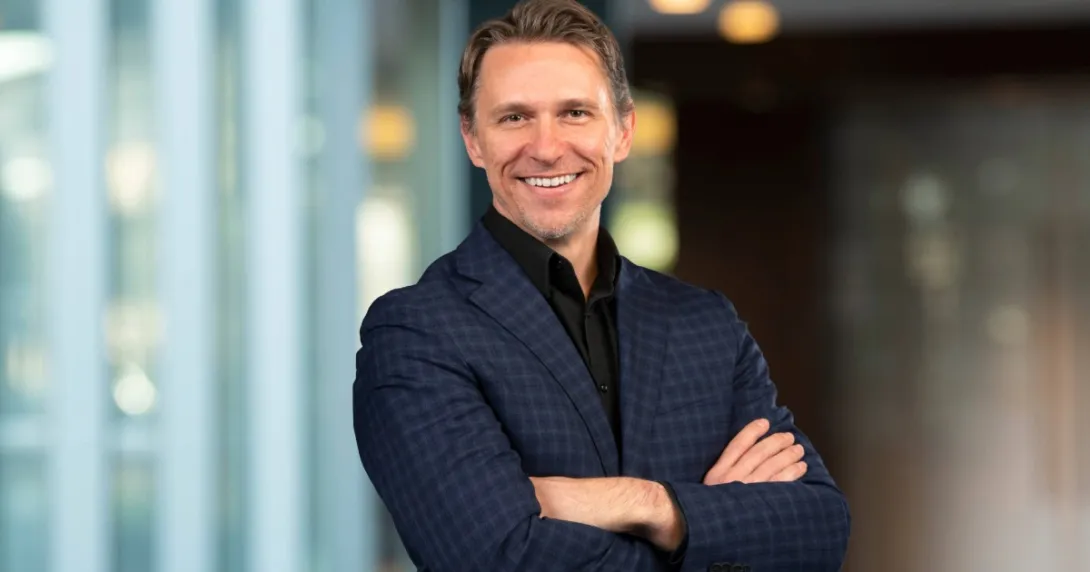
Duncan Grodack, CIO at Altamonte Springs, Florida-based AdventHealth
Photo: AdventHealth
One of the key priorities in health IT today should be to make sure technology strengthens – not distracts from – the human connection in care delivery, says Duncan Grodack, CIO at Altamonte Springs, Florida-based AdventHealth.
"Healthcare is deeply personal," said Grondack. "At AdventHealth, we talk about helping people feel whole – body, mind and spirit – and that starts with trust between a patient and a caregiver. When clinicians are buried in clicks, documentation and administrative complexity, that connection can suffer.
"Technology should make that relationship easier, not harder," he added. "It should bring clarity where there's confusion and remove friction where there's frustration. Our responsibility in IT is to build systems that support caregivers so they can focus on listening, guiding and caring for the whole health of the person in front of them."
Time, of course, is finite – if IT can give even a few minutes back to a nurse or physician during a shift, that's meaningful, he added. The future of health IT isn't about adding more tools – it's about creating smarter, simpler systems that fade into the background and allow human connection to take center stage, he said.
Strengthening connections via IT
Beyond tools like ambient documentation and AI summaries – which are helping give time back to clinicians across the industry, freeing them to focus on patient care – AdventHealth also is investing in areas that strengthen connection for both patients and caregivers, Grodack noted.
"On the consumer side, our focus is simple: meet people where they are and make it easier to access care," he explained. "Through the AdventHealth app, patients can schedule appointments, message care teams and navigate services in ways they expect. But we've also built in something more personal.
"If someone needs help, they can chat with us – and when it matters most, connect directly with a real care advocate who can guide them to the right provider, help resolve concerns and stay with them through the process," he continued. "Patients can also submit prayer requests through the app, and our team responds. Offering this kind of support for people's spiritual care is an important part of who we are."
The national health system recently launched a simplified referral process, as well, designed to connect patients with specialists more quickly. In the first week alone, the organization saw measurable improvement in how quickly patients were scheduled – which is meaningful for someone waiting for answers, Grodack said.
Smart rooms extend human connection
"Inside our hospitals, we're deploying smart rooms across our facilities nationwide with a clear purpose: extend the human connection, not replace it," he explained. "These rooms allow loved ones who cannot be at the bedside to join rounds virtually, hear directly from physicians and nurses, and participate in important decisions, which brings comfort and clarity to families.
"Smart boards in the room also offer real-time updates on care plans, so patients and their loved ones can see and understand what comes next, allowing confidence to grow," he continued. "Patients can connect with spiritual care, an important part of the healing journey for so many. And video visits with specialists can be arranged much sooner, giving patients access to expert input regardless of geography."
From an IT perspective, this is more than infrastructure – it is a strategic enabler of compassionate care that recognizes the interconnectedness of physical, mental and spiritual health, he added.
"Whether it is bringing a family member into care team updates, connecting a patient to a translator or chaplain, or enabling timely specialty consultation, the technology is designed to strengthen relationships and support strong partnerships," he stated.
"Across all of this work, the goal is consistent: reduce friction, create clarity and give time back," he continued. "When we streamline our care teams' workflows and make the experience simpler for patients, we make even more space for care that addresses the whole person and strengthens human connections. That's when technology is doing its job: quietly supporting a more restorative experience for everyone involved."
Stay grounded in the human problem
Grodack offers some advice for hospital and health system C-suite executives and other health IT leaders within the organizations to address these issues and challenges.
"First, stay grounded in the human problem you're trying to solve," he advised. "It's easy to get pulled into the excitement of new capabilities, especially with artificial intelligence moving as quickly as it is. But the right starting point is not the tool: It's the friction in care. Where are clinicians losing time? Where are patients feeling confused? Where is the experience more complicated than it needs to be?
"From there, leaders need strong governance and clear guardrails," he continued. "Responsible use of AI requires interdisciplinary oversight, transparency and continuous evaluation. This conversation extends beyond IT, requiring clinical, operational, legal and ethical perspectives working together."
Finally, measure what truly matters, he said.
"Not just efficiency metrics, but whether we are strengthening connection, improving clarity and organizing care around the needs of the consumer so we can help them feel whole," he noted.
"When we keep people at the center, innovation becomes less about chasing technology and more about stewarding it well," he concluded. "And that stewardship is what will define our impact in the years ahead."
Follow Bill's health IT coverage on LinkedIn: Bill Siwicki
Email him: bsiwicki@himss.org
Healthcare IT News is a HIMSS Media publication.
WATCH NOW: The model context protocol at work in AI and clinical workflows


