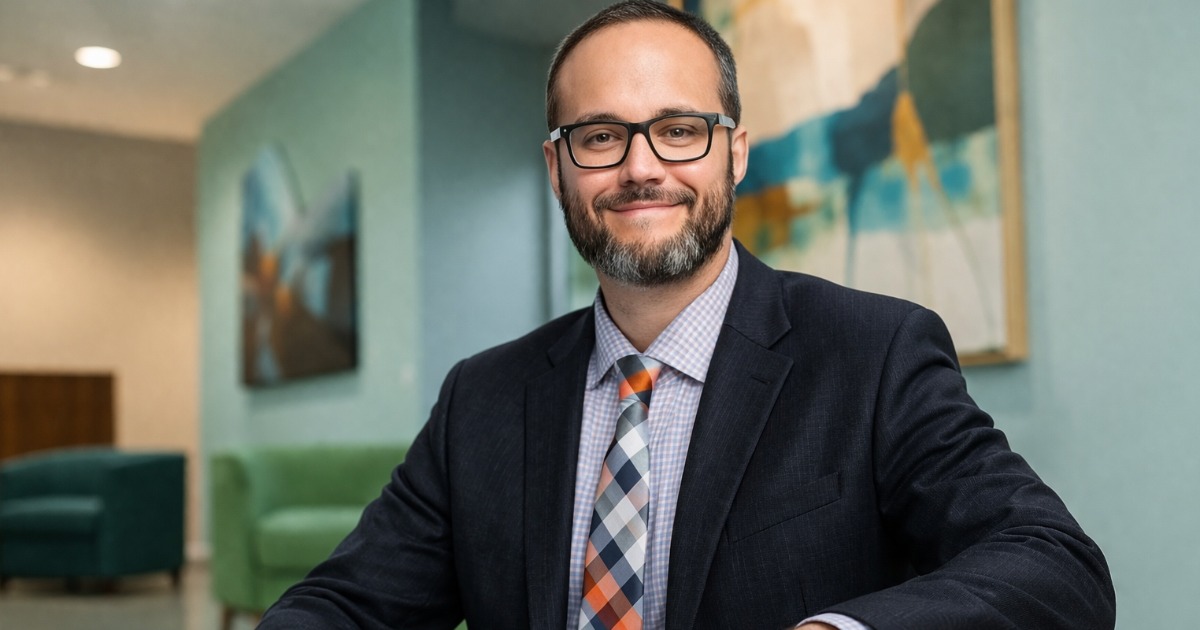
Dr. Andrew Mellin, vice president and chief medical information officer at Surescripts
Photo: Surescripts
This year, prior authorization will become less of a pain point as more prescribers adopt automated prior authorization technologies, predicts Dr. Andrew Mellin, vice president and chief medical information officer at Surescripts.
Mellin has advanced strategic health IT through convening industry stakeholders within the Surescripts Network Alliance, focusing on population health, medication adherence and affordability, specialty medications and interoperability.
"We are at a critical moment where the building blocks of healthcare interoperability and advances in technology are joined by policymakers and healthcare organizations – including health plans, pharmacy benefit managers and providers – that are aligned on the value of helping patients get the therapies they need faster and without confusion or delays, and creating a better care experience," he said.
"In 2026, all sides of the healthcare delivery equation will focus on truly removing burdens in the process – not shifting them – to make meaningful change and improve healthcare for patients," Mellin added. "This means hospitals and health systems will turn to technology that has proven results, like automated prior authorizations that lead to approved medications in 30 seconds or less – eliminating delays that, in the past, have kept patients from receiving timely access to treatment."
Every day a patient spends waiting for treatment can add stress, uncertainty and risk of worse health. The opportunity to make meaningful change has never been greater, and in 2026, healthcare leaders will remain committed to realizing the full potential of technology and its greater purpose of better patient care, he added.
Responsible AI will be key
Also this year, Mellin believes healthcare organizations, clinicians and care managers will work to ensure AI tools are used in the most responsible way.
"I'm sure at HIMSS26 we will see almost every healthcare vendor tout their AI-powered capabilities," he said. "And for good reason – it's proven to be a game changer, with perhaps the most dramatic impact on healthcare in the more than 25 years I've worked in health IT.
"Yet as profound as these impacts are, and will continue to be, responsible AI in healthcare will be a defining priority in 2026," he continued. "It will require that we balance our optimism for what's possible with the realism that not every challenge will be solved as easily as the AI hype might suggest."
With rapid AI adoption across care settings, it will be increasingly critical that provider organizations evaluate this technology with appropriate scrutiny, ensuring they minimize unintended and unforeseen outcomes, and that leaders are investing in governance that brings clinical and technical expertise together, keeping patients at the center, he added.
Removing barriers to care and meds
Additionally, Mellin expects to see major steps forward in 2026 to improve access to medications for patients and even remove potential barriers to care much earlier in the journey.
"One thing has remained constant throughout my career: Providers will always push back on too many clicks and cumbersome technology," he explained. "But this year, I predict we will finally start to hear providers say that healthcare technology has turned a corner.
"It's been the goal all along that technology will fade into the background for providers, and success will be measured by its ability to deliver impact seamlessly, without feeling like a hindrance or extra step in providing quality care for patients," he continued.
Although it's been a tall hill to climb – digitizing complicated clinical processes – today, with AI, interoperability at scale and greater automation, Mellin said he finally is hearing that burdens are being removed, time is being given back to providers to spend with patients, and processes like prior authorizations are happening faster.
"This all is helping patients access needed treatments without delay," he concluded. "I'm optimistic that technology will continue to rapidly advance to truly support providers, which naturally leads to better care and better experiences for patients."
Follow Bill's health IT coverage on LinkedIn: Bill Siwicki
Email him: bsiwicki@himss.org
Healthcare IT News is a HIMSS Media publication.
WATCH NOW: Wisdom on nurses and IT from a health system's nurse CIO